BOOKMARK THIS PAGE FOR RECENT UPDATES – REGION NEWS INDEX – NEWS ARCHIVE – Commentary in italics.
SRI LANKA GUARDIAN – OPINION:
The UN Is No Longer Fit for Purpose
A CASE FOR DISMANTLING GLOBAL CENTRALISM IN FAVOR OF REGIONAL ORDER
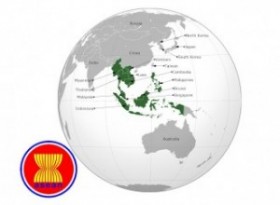
by Raj Gonsalkorale, Sri Lanka Guardian, April 3, 2026 – A regional model is suggested as a potential alternative to the UN system. In such a model, the global policing role could shift from a centralized UN Security Council with individual country representation to a council composed of regional organizations such as the African Union, ASEAN, the European Union, the Organization of American States, and similar regional groupings, including both existing entities and those that may be formed in the future. These groupings, which are currently more focused on trade and economic cooperation than on security matters, could take on greater responsibility without direct individual country membership.
‘COALITION OF INDEPENDENCE’:
Macron urges new world order, warns against passivity in global ‘disorder’
‘MADE IN EUROPE’ APPROACH SIMILAR TO POLICIES IN NORTH AMERICA
Anadolu Agency (Turkiye), April 3, 2026 – French President Emmanuel Macron on Friday called for building a new world order and warned against remaining “passive” amid what he described as growing global disorder….
Macron called for a system based on cooperation among “able and willing countries” that support what he described as a “coalition of independence.”….
“In the world we live in — with American tariffs and Chinese overcapacity — we must protect our production capacities,” he said, adding that Europe is advancing a “Made in Europe” approach similar to policies in North America.
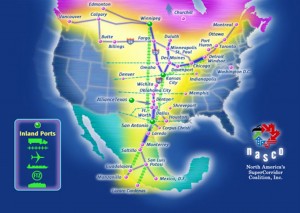
MADE IN NORTH AMERICA:
Mexico Eyes USMCA to Reduce Mining Dependence on China
INTEGRATING DOMESTIC PRODUCTION INTO REGIONAL SUPPLY CHAINS, USMCA FRAMEWORK

Mexico Business, April 1, 2026 – Mexico’s mining sector is leveraging the 2026 USMCA review and the Mexico-US Action Plan on Critical Minerals to reduce structural dependence on China for mineral processing, positioning domestic production of lithium, silver, and copper within North American supply chains for automotive, electromobility, and advanced manufacturing industries….
The broader policy framework backing this shift is already in motion. The Mexico-US Action Plan on Critical Minerals, announced Feb. 4, 2026, establishes a cooperation framework to reposition Mexico’s mining sector within the North American industrial landscape, integrating domestic production into regional supply chains for electromobility, digitalization, and advanced manufacturing, according to CAMIMEX.
Luis Rosendo Gutiérrez, Deputy Minister for Foreign Trade, said the government’s minerals agenda is being integrated directly into the USMCA framework to link resources. including lithium and silver, to the North American industrial ecosystem shared by Mexico, the United States, and Canada.
EU, EAU:
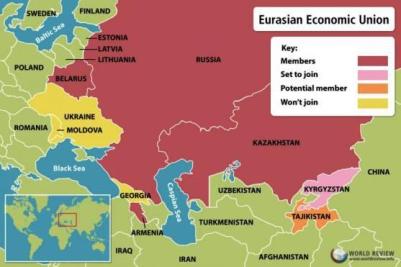
Putin says Armenia cannot be in EU, Eurasian Economic Union simultaneously
BELONGING TO TWO CUSTOMS UNIONS ‘IMPOSSIBLE BY DEFINITION’

Xinhua (China), April 1, 2026 – Russian President Vladimir Putin said on Wednesday that Armenia cannot be in both the European Union and the Eurasian Economic Union at the same time, as both are customs unions….
Established in 2015, the Eurasian Economic Union comprises Russia, Kazakhstan, Belarus, Kyrgyzstan and Armenia.
‘NORTH AMERICAN SECURITY PERIMETER’:
US unveils ‘Greater North America’ strategy to redefine regional security
‘From Greenland to Ecuador and from Alaska to Guyana’ within ‘immediate security perimeter’

Business Standard, Updated March 30, 2026 – US War Secretary Pete Hegseth on Sunday (local time) outlined a new geopolitical framework, naming it the “Greater North America” strategy, describing it as a redefinition of regional security under President Donald Trump’s leadership.
Speaking at the US Southern Command headquarters in Doral (Florida), Hegseth said the administration’s strategic vision stretches “from Greenland to the Gulf of America to the Panama Canal,” encompassing all sovereign countries and territories north of the equator within “immediate security perimeter.”
Report: European Union’s shift to defense space and security signals changing role for ESA
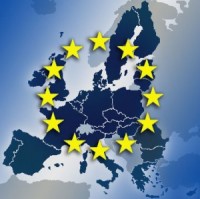
Aerospace America, March 31, 2026 – Despite its relative youth, the European Union’s five-year-old space agency, the European Union Agency for the Space Programme (EUSPA), is poised to displace the decades-old European Space Agency as the biggest spender in the region’s space sector, according to a new report….
What’s behind this spending shift is a move by EUSPA, which manages the EU’s Space Program, to begin supporting the bloc’s military, security and defense space needs, on top of its existing role running civilian services — such as positioning, navigation and timing, through Galileo, and Earth observation, through Copernicus — for the EU’s 453 million citizens.
FORUM OPINION:
From Neutrality to Necessity: The Gulf’s ‘Turning Point’ Must Cement a Middle East NATO
“The Abraham Accords Laid the Groundwork, but the Current War Has Forged the True Alliance, as Iran Attacks Gulf Cooperation Council States“

Middle East Forum, March 30, 2026 – The GCC has officially labeled Iranian aggression a “turning point,” effectively abandoning their neutrality. As UAE Ambassador to the U.S. Yousef Al Otaiba correctly noted this week, ending this war prematurely would be a catastrophic error. The region requires a definitive outcome that neutralizes the full scope of the Islamic Republic’s threat once and for all. The Saudis are urging Trump to continue. This is a historic paradigm shift, and both Jerusalem and Washington must seize it to forge a permanent, formalized regional defense command-a Middle East NATO.
ASEAN, GCC:
China has key role as ASEAN, Gulf ties evolve
ASEAN’s LARGEST TRADING PARTNER, MAJOR GCC ENERGY CUSTOMER

China Daily, March 27, 2026 – The growing engagement between the Association of Southeast Asian Nations and the Gulf Cooperation Council is often cited as part of the broader rise of cooperation across the Global South….
Supply chain disruptions, energy market volatility, technological competition and growing geopolitical polarization have forced both ASEAN and the Gulf states to rethink how growth, resilience and autonomy can be sustained in a more uncertain world….
China’s contribution is particularly visible in the area of connectivity….
EUROPEAN UNION:
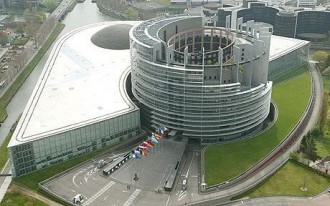
Commission welcomes historic agreement to reform EU Customs Union

European Commission, March 25, 2026 – The Commission welcomes today’s agreement between the European Parliament and the Council, delivering a landmark reform of the EU Customs Union. The most ambitious reform of EU customs rules since 1968 introduces new measures for e-commerce and launches a modern, data-driven customs architecture that simplifies procedures and enhances efficiency.
At the heart of the customs reform lies the establishment of a new EU agency, the EU Customs Authority, to be located in Lille, France. It will coordinate and modernise customs operations across all 27 Member States….
EU-MERCOSUR TRADE ACCORD TO APPLY PROVISIONALLY FROM MAY 1
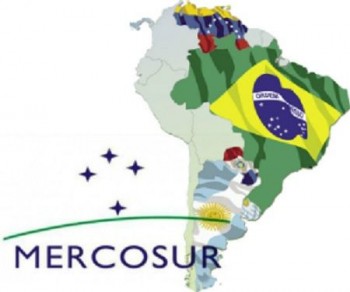
Reuters, March 23 (Reuters) – The European Union’s free trade agreement with South American bloc Mercosur will apply on a provisional basis from May 1, the European Commission said on Monday.
The key trade elements of the accord, which has proven contentious in Europe, will apply from that date between the 27-nation European Union and the countries in Mercosur that have completed their ratification procedures before the end of March.
ARAB GULF, GCC:
To Protect Its Strategic Interests, the Gulf Must Form a More Cohesive Bloc
GENUINE CONFEDERATION OR AWAIT PROTECTION FROM OTHERS
“As war reshapes the regional order, Gulf states must choose between fragmented responses and deeper coordination”
Middle East Council on Global Affairs, March 24, 2026 – History’s verdict is clear: regions aware of their true weight become centers of power, while those awaiting protection from others are destined to become arenas of conflict. The Gulf states, therefore, must choose: either establish a united regional framework—a genuine confederation that combines their economic and strategic weight—or remain mere spectators on their own land, unsure where the winds of struggle and survival will carry them, as external parties shape the Gulf security environment.
NORTH AMERICA – USMCA:
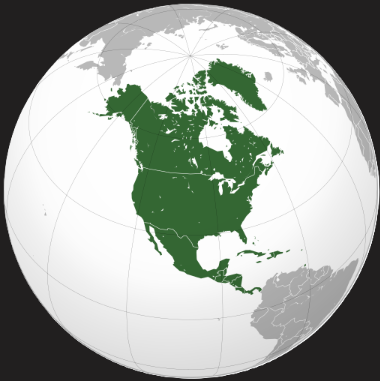
Soaring oil prices could give Canada the leverage it needs with Trump in upcoming CUSMA talks
“WHAT THIS DISRUPTION DOES IS REALLY REAFFIRM THE FORTRESS NORTH AMERICA CONCEPT”
Toronto Star, March 18, 2026 – With a review of the Canada-U.S.-Mexico trade agreement set to begin this summer, those soaring crude prices should remind the U.S. government that having a reliable source of oil right next door benefits both countries, said Matthew Holmes, head of public policy at the Canadian Chamber of Commerce.
International trade lawyer Barry Appleton, however, questions whether Canada would even use any leverage to its strategic advantage in CUSMA talks….
“We sit here and bemoan the fact that they supposedly hold all the cards, but we’ve got substantial leverage,” Appleton said…
“We’re the largest market the U.S. has for their digital stuff; AI, cloud software,” Appleton said. “We’re their largest export market.”
AI and ‘EUROPEAN SOVEREIGNTY’:
Mistral Pioneers Sovereign AI in Europe
MAJOR STEP TOWARD EUROPE’S TECHNOLOGICAL INDEPENDENCE
AI Business, March 18, 2026-European AI company Mistral has staked its claim as the primary alternative to U.S.-based AI companies, leaning heavily into the values of data sovereignty and open source….
And with Mistral’s small, open-weight models under Apache 2.0 licenses, businesses can download and host them on their own private servers. This “private AI” approach gives companies more control over their deployments, making it an attractive option for heavily regulated industries such as finance, government and defense….
Mistral also plans to invest over $1 billion in the construction of an AI-focused data center in Sweden in partnership with EcoDataCenter. The facility, to open in 2027, will deliver AI-native infrastructure “built for performance, efficiency, and full European control,” the company said on LinkedIn.
“This initiative is a major step toward Europe’s technological independence, offering customers a fully European AI stack, from design to operation, with data processed and stored locally,” according to the post.
GULF COOPERATION COUNCIL:
A ‘Gulf NATO’: Ambition Meets Reality
Middle East Broadcasting Network (MBN), March 16, 2023 – Former Qatari prime minister Hamad bin Jassim has called for the creation of a Gulf “military alliance” modeled on the North Atlantic Treaty Organization (NATO), with Saudi Arabia playing the central role because of its geographic, political, and military weight.
In a post that drew wide engagement on the platform X, bin Jassim said that the ongoing confrontation with Iran offers “lessons and insights that the Gulf Cooperation Council states must draw, foremost among them solidarity, alliance, and unity of word and position.”
The Gulf Cooperation Council established the Peninsula Shield Force in 1984, headquartered in Saudi Arabia, as the joint military force of GCC states.
SIX, OR ONE BLOC OF SIX?
Middle East Council on Global Affairs, March 16, 2026 – As competing narratives emerge from the U.S.–Israeli war against Iran, the real question for the Gulf lies not in who won the war but in what comes next: whether the GCC will continue to operate as six separate states or evolve into a unified strategic bloc capable of confronting an increasingly volatile regional order.
AFRICAN UNION:
Africa must not only fuel the AI revolution, it must shape it
The question is whether Africa will help write the rules, or whether, once again, its resources will build someone else’s prosperity while its people are left to manage the consequences.
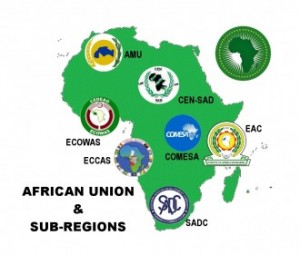
The Maverick (South Africa), March 17, 2026 – In the Lualaba Province of the Democratic Republic of Congo (DRC), miners, some of them children, extract cobalt by hand from tunnels that regularly collapse. That cobalt travels through a global supply chain until it reaches the data centres of Silicon Valley and Shenzhen, where it powers the servers training the most advanced artificial intelligence systems on Earth. The same systems that may, within a generation, reshape every economy on the continent….Beyond South Africa, the African Union and Southern African Development Community should convene an AGI preparedness summit, bringing together heads of state, technology researchers, trade unions and civil society to establish a continental position before the rules of the AI age are written without African input.
ASEAN – REGIONAL INFRASTRUCTURE:
Bridging the Mekong for regional integration

East Asia Forum, March 14, 2026 – While Cambodia, Laos, Myanmar and Vietnam joined ASEAN between 1995 and 1997, integrating maritime and continental members has remained a major challenge. Regionalism in the Mekong region is both a prerequisite and practical building block for regionalism in ASEAN.
On average, one ‘friendship bridge’ — a bridge which is also a border crossing — has been opened over the Mekong every five years, with the First Lao–Thai Mekong Friendship Bridge completed in 1994. There are now five friendship bridges between Laos and Thailand and one between Laos and Myanmar….
ASEAN is by far the most diverse regional bloc in the world, with a vast array of religious identities, ideologies, political systems and cultures.
ARAB GULF – GCC:
IMEC in the crossfire: How an Iran-Israel war could reshape India’s West Asia strategy
CORRIDOR COULD BYPASS STRAIT OF HORMUZ
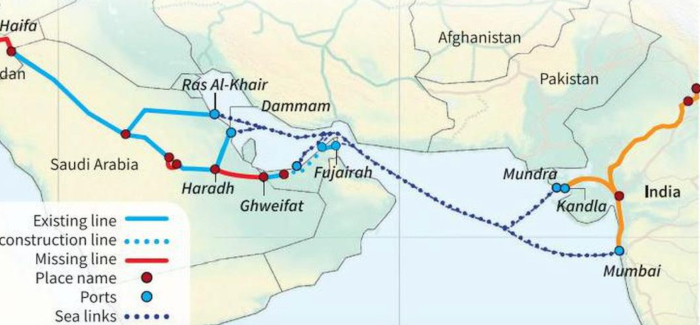
Firstpost (India), March 11, 2026 – The India-Middle East-Europe Economic Corridor (IMEC), announced during the G20 summit in New Delhi in September 2023, is one of the most ambitious connectivity initiatives linking Asia, West Asia and Europe….
The proposed route connects Indian ports to the Gulf via sea lanes, followed by rail links through the UAE and Saudi Arabia, and then onward through Jordan and Israel to Mediterranean ports serving European markets….
IMEC deliberately bypasses Iran and instead relies on infrastructure in Gulf states and Israel, placing it directly within one of the most volatile geopolitical regions in the world….
Much of the world’s energy supply passes through the Persian Gulf, particularly the Strait of Hormuz, a strategic maritime chokepoint linking Gulf oil producers to international markets….
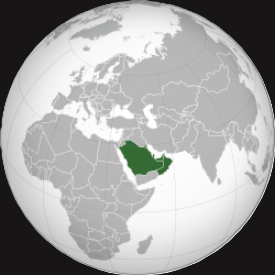
Tehran’s miscalculation: How Iranian missiles brought Gulf states, Israel together – analysis
STRATEGIC BLUNDER MAY FINALLY CEMENT REGIONAL AXIS
By targeting every GCC member with missiles and drones, Tehran has achieved the unthinkable: placing Israel and Qatar on the same team.
Jerusalem Post, March 4, 2026 – Within the first 48 hours, Tehran launched missiles and drones not only toward Israel but toward every member of the Gulf Cooperation Council: the UAE, Saudi Arabia, Qatar, Kuwait, Oman, and Bahrain. What might initially have appeared to be a confrontation between Iran and the US and Israel quickly transformed into something wider – a regional conflict touching key Sunni Arab states.
ARAB STATES UNITE AS IRAN STRIKES EVERY MEMBER OF GULF COOPERATION COUNCIL
“Any attack against any member state constitutes a direct attack against all”
Jewish Insider, March 2, 2026 – After the U.S. and Israel launched a major operation against Iran on Saturday, the regime struck sites in at least nine countries around the Middle East, including Israel, Jordan, Syria and every member of the Gulf Cooperation Council — Bahrain, Kuwait, Oman, Qatar, Saudi Arabia and the UAE….
“The Council also expressed full solidarity among the GCC countries and their unified stance in confronting these attacks, stressing that the security of GCC member states is indivisible, and that any attack against any member state constitutes a direct attack against all GCC countries,” the statement went on….
ASEAN – REGIONAL INFRASTRUCTURE:
ASEAN power grid is next investible infrastructure opportunity
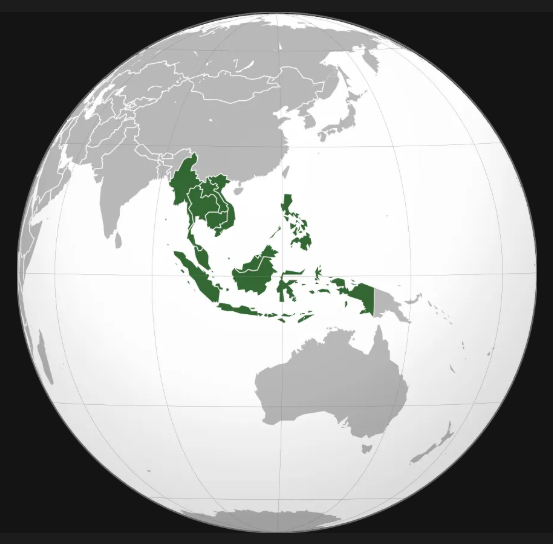
Khmer Times, March 5, 2026 – Southeast Asia is entering an electricity supercycle. Industrial expansion, rapid urbanisation, electrification of transport and a surge in data centres are driving power demand across Asean at a pace few regions can match….
This is where the ASEAN Power Grid (APG) moves from policy aspiration to investment opportunity, fully consistent with ASEAN 2045: Our Shared Future and the AEC Strategic Plan, which underscore the importance of deeper regional integration, resilience, and sustainable infrastructure development….
‘MADE IN THE EU:’
European Commission proposes ‘Buy EU’ plan to compete against China
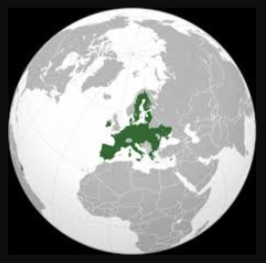
The Guardian (London), March 4, 2026 – The European Commission has proposed a “Buy EU” plan to boost domestic low-carbon industries and help the continent compete against China…. The rules mark a big shift in economic thinking from Brussels, long a bastion of open markets….
The plan seeks to reverse Europe’s industrial decline, setting a target that manufacturing will represent 20% of Europe’s GDP by 2035, up from 14.3% in 2024.
To reach this goal, local and national authorities would be required to meet “Made in the EU” content targets when spending public money or designing subsidy programmes for goods in “strategic sectors” including green tech and cars.
‘FORTRESS NORTH AMERICA’:
Variable Geometry 101: Canada’s New Cards at the CUSMA Table
USTR LANGUAGE AMOUNTS TO ‘COMMON EXTERNAL TARIFF AGAINST CHINA’
Policy Magazine (Canada), Feb 15, 2026 – [United States Trade Representative Jamieson Greer] is pushing for “enhanced economic security alignment on tariffs, export controls, and investment screening,” language that amounts to a common external tariff against China. Carney’s diversification strategy, 12 trade deals on four continents, the CPTPP-EU bridge proposal, and the narrow China EV-canola deal, points in the opposite direction…. The CUSMA review will force a choice: accept Fortress North America alignment or defend strategic autonomy and negotiate different terms…. June 1 is the deadline for governments to submit recommended changes to CUSMA/USMCA. July 1 triggers the formal review. If the U.S. Supreme Court strikes down IEEPA tariffs, Trump loses his primary leverage tool and the review dynamic shifts.
SE ASIA:
Asean’s role in a new world order
ADVANCE VISION OF ASEAN ECONOMIC COMMUNITY: SINGLE MARKET, CUSTOMS UNION
Bangkok Post, Feb 16, 2026 – Profound shifts are reshaping the global economy as political uncertainty, geopolitical rivalry and changing trade patterns disrupt the old world order, while a new one has yet to fully emerge….
The Association of Southeast Asian Nations (Asean) must play to its strengths.
The current global environment presents Asean with an opportunity to advance the vision of the Asean Economic Community (AEC) — to establish a single market and customs union. Such integration would simplify trade, enhance cross-border commerce and facilitate easier movement of people across the region.
ARAB GULF:
GCC chambers plan Gulf Guarantee project to boost intra-regional trade
STRESS ESTABLISHMENT OF UNIFIED GULF COMMITTEE FOR AI
“GULF ECONOMIC INTEGRATION IN LINE WITH THE OBJECTIVES OF THE GULF COMMON MARKET”
Arab News, Feb 16, 2026 – The Federation of GCC Chambers, in cooperation with the Customs Union Authority, intends to launch the Gulf Guarantee Project to provide a unified mechanism for exports and trade transactions and to enhance the efficiency of intra-GCC trade, which reached about $146 billion by the end of 2024, Saleh Al-Sharqi, Secretary-General of the federation, told Al-Eqtisadiah….
He noted that these initiatives fall within an integrated vision to address obstacles hindering investment and intra-regional trade flows by developing…and supporting Gulf economic integration in line with the objectives of the Gulf Common Market.
DIGITAL EURO:
European Parliament Backs Digital Currency Proposal
All transactions would be subject to monitoring, restrictions, sanctions

The European Conservative, Feb 10, 2026 – European Union lawmakers on Tuesday, February 10th expressed support for the introduction of a digital euro. They approved two amendments to an annual report on the European Central Bank (ECB), signaling backing for the digital currency initiative….
Unlike cash, the digital euro would leave a permanent record of every transaction, purchase, and financial activity…. Every payment could be monitored, controlled, or even subject to restrictions or sanctions.
This system could enable measures previously unimaginable, such as limiting spending in specific categories, restricting donations to specific organizations, or implementing “expiration dates” on funds to encourage consumption.
ARAB GULF:
Why Can’t the GCC Launch Its Own Euro?
The National Interest, Feb 9, 2026 – Since the GCC committed to a common currency in 2003 with a target launch date of 2010, the project has faced repeated setbacks. Oman withdrew in 2006, citing its inability to meet convergence criteria such as public debt limits.
The UAE followed in 2009 after member states decided that Riyadh would host the central bank. Emirati officials had campaigned to host the institution in Abu Dhabi and objected that most major GCC bodies were already headquartered in Saudi Arabia….
While the Gulf pursues other forms of integration, from hosting global events like the FIFA World Cup to launching a unified visa system in 2026, these initiatives succeed precisely because they do not threaten national sovereignty. A common currency, by contrast, requires surrendering control over monetary policy to a shared institution, a step that Gulf states have proven unwilling to take.
NORTH AMERICAN RESOURCE SECURITY:
US-Mexico Critical Minerals Pact Reshapes North American Supply Chains
60-DAY TIMELINE CREATES UNPRECEDENTED URGENCY
Canada’s notable absence suggests deliberate timing rather than exclusion
Discovery Alert, Feb 6, 2026 – The US-Mexico pact for critical minerals represents a structured approach to supply chain resilience through coordinated policy frameworks. The 60-day implementation timeline announced in January 2026 creates unprecedented urgency….
Canada’s notable absence from initial announcements, despite the scheduled USMCA review process, indicates either strategic positioning for separate negotiations or phased integration approaches. Given Canada’s substantial critical minerals production capacity, particularly in rare earth elements, cobalt, and nickel, this absence suggests deliberate timing rather than exclusion from broader North American resource security planning.
Mexico and the US focus on critical minerals in USMCA review
‘TO STRENGTHEN REGIONAL INTEGRATION’
BNamericas, Jan 29, 2026 – Mexico and the United States agreed to begin formal talks on possible changes to the United States-Mexico-Canada Agreement (USMCA), making critical minerals a central pillar of the first joint review of the agreement scheduled for this year, in an effort to strengthen regional integration and the security of supply chains.
The understanding was reached during a meeting in Washington between the United States Trade Representative, Jamieson Greer, and Mexico’s economy secretary, Marcelo Ebrard….
China Daily opinion:
Multipolarity is future of global governance

China Daily, Jan 26, 2026 – Notably, regional multilateral organizations are playing significant roles in global governance. For instance, the Gulf Cooperation Council summit issued the Sakhir Declaration to emphasize regional solidarity. The African Continental Free Trade Area paved the way for faster establishment of a customs union and advanced the African Union’s Agenda 2063. The Gyeongju Declaration, endorsed at the 32nd APEC Economic Leaders’ Meeting, and the signing of the China-ASEAN Free Trade Area 3.0 Upgrade Protocol injected new momentum into Asia-Pacific cooperation. The Community of Latin American and Caribbean States and the Southern Common Market, or Mercosur, are working to strengthen regional industry chains and reduce dependence on the US dollar in settlements. Across the world, regional and sub-regional mechanisms are proactively contributing to global governance.
Carney: Canada Has “No Intention” Of Pursuing Free Trade Deal With China
Responds to Trump’s 100% tariff threat, says China deal consistent with CUSMA [USMCA]
Global News (Canada), Jan 25, 2026 – Prime Minister Mark Carney responded Sunday to U.S. President Donald Trump’s threats of 100 per cent tariffs on Canadian imports to the U.S. over Canada’s new trade relationships with China….
Canada is not pursuing free trade agreements with China and has no intention of doing that, Carney said.
THE NEW REGIONAL MERCANTILISM:
Is Greenland the next frontier for AI infrastructure?
NORTH AMERICA, EUROPE AND ‘STRATEGIC RESOURCE COMPETITION’
World Construction Network, Jan 21, 2026 – Given Greenland’s strategically positioned location – between North America and Europe – the territory has long been recognised by US policymakers as critical to national security….
However, Trump’s interest in Greenland may reflect more than geopolitics. It could also align with a drive to secure access to critical minerals needed for next-generation technology infrastructure, including large-scale AI data centres and power grids. Greenland is known to have vast endowments of critical minerals…. As a result, this places Greenland at the centre of strategic resource competition.
China’s Role in the USMCA Review
Baker Institute (Rice University), Jan 20, 2026 – ….After receiving the comments and holding the hearing, U.S. Trade Representative Jamieson Greer reported to the relevant congressional committees on the Trump administration’s preparations for the USMCA review….
In a submission reflective of general domestic industry concerns, the Alliance for American Manufacturing (AAM) …. said “Canada and Mexico should accelerate their ongoing efforts to align their trade policies with U.S. measures on tariffs….
Silverado, a think tank, argued for “a diversified North American supply chain that reduces reliance on China,” with several specific suggestions:
1. Adopt unified external tariffs on Chinese critical mineral inputs, equipment, and downstream products….
2. Implement a common transshipment tariff modeled after the July 2025 U.S. measures to address duty circumvention.
3. Establish rules of origin for minerals mined, processed, recovered, or recycled in North America to incentivize regional demand through preferential tariff treatment….
A final area for possible changes as part of the USMCA review is something along the lines of the common external tariff called for by various stakeholders. While perfectly coordinated external tariffs among all three USMCA governments may be unlikely, the recent moves by Canada and Mexico to increase some of their tariffs so that they are better aligned with U.S. tariffs indicates that this idea has some government support.
On this issue,Greer’s report to Congress notes that Mexico’s tariffs on imports from non-FTA partners was an example of Mexico taking “significant concrete steps to address our concerns.”
WORLD ECONOMIC FORUM 2026:
WEF lauds GCC: ‘A model of cooperation in a fragmented world’
FORUM TOUTS GCC MARCH THROUGH ‘BUILDING BLOCK’ LEVELS OF REGIONAL INTEGRATION
After “free trade” customs union, common market, regional infrastructure, Gulf bloc eyes EU-style monetary union, single currency
World Economic Forum, Jan 19, 2026 – At a time when many regions struggle to reconcile national priorities with collective action, the Gulf Cooperation Council (GCC) stands out as an example of regional cooperation….
Since its establishment in 1981, the GCC has pursued deeper economic integration through institutional frameworks…. These frameworks, acting like building blocks of integration, have progressively evolved into practical mechanisms supporting a more unified regional economy.
A major milestone was the implementation of the GCC Customs Union in 2003 – a free trade agreement which standardized customs procedures and introduced a Common External Tariff of 5%…. This was followed by the GCC Common Market, granting citizens national treatment across member states in employment, business, and investment….
Alongside trade and labour integration, the original GCC framework also envisioned a Monetary Union among participating member states. While the institutional architecture for monetary coordination remains in place, progress toward a full single currency has stalled over time….. As a result, the Monetary Union remains an active but narrow-scope initiative, reflecting both the ambition of the GCC’s original integration agenda and the practical constraints of deeper economic unification….
INTER-REGIONAL TRADE:
European Union and Mercosur bloc of South American nations sign landmark free trade agreement
BLOCS’ PACT BRINGS ALTERNATIVE TO TRUMP TARIFFS
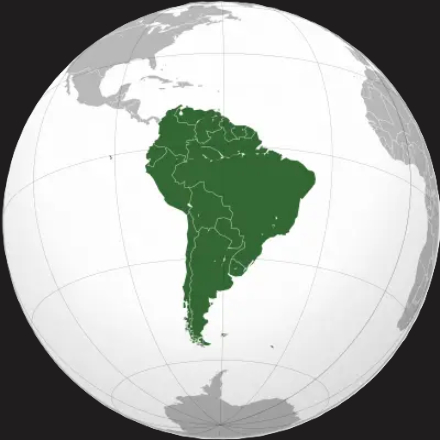
The Morning Sun (AP), Jan 17, 2026 – The European Union and the Mercosur bloc of South American countries formally signed a long-sought landmark free trade agreement on Saturday, capping more than a quarter-century of torturous negotiations to strengthen commercial ties in the face of rising protectionism and trade tensions around the world.
The signing ceremony in Paraguay’s humid capital of Asunción marks a major geopolitical victory for the EU in an age of American tariffs and surging Chinese exports….
It also sends a message that South America keeps diverse trade and diplomatic relations even as U.S. President Donald Trump declares dominance in the Western Hemisphere.
‘REGIONAL CONVERGENCE’?
The Middle East’s once-in-a-century moment
‘This is not chaos but convergence: a historic opening to dismantle regional extremism and replace it with integration, stability, and growth’

IRAN, YEMEN, LEBANON, SYRIA, GAZA
Jerusalem Post, Jan 15, 2026 – If Iran’s radical apparatus is decisively dismantled, the ripple effects would be enormous. Terror networks would lose their principal financier. Youth across the region would gain access not just to hope, but to tangible economic horizons. Trade routes, tourism, investment, and regional cooperation – long held hostage by militancy – would finally have room to regrow….Yemen must follow….
Imagine a Middle East where a young Iranian engineer builds software alongside regional partners rather than weapons against them.
ARAB GULF – REGIONAL AI:
Why the GCC might have an edge on implementing Agentic AI
World Economic Forum, Jan 15, 2026 – While the world experimented with AI assistants and chatbots in 2023 and 2024, 2025 marked a clear inflection point in the Gulf Cooperation Council (GCC), comprised of the UAE, Saudi Arabia, Qatar, Kuwait, Bahrain and Oman. New national AI frameworks, sovereign cloud rollouts and the first wave of enterprise deployments pushed Agentic AI from concept to practice.
AI agents not only respond to prompts but perceive their environment, make decisions and take coordinated action with humans “on the loop,” are now a reality….
The GCC also has substantial infrastructure advantages. Sovereign-by-design cloud zones across the UAE, Saudi Arabia and Bahrain keep sensitive data within national borders. They are encrypted by default and auditable in real time. This reduces the jurisdictional complexity that hampers cross-border data flows….
EUROPE, SOUTH AMERICA:
EU-Mercosur trade pact signals limits of Trump’s hardball diplomacy in Latin America
WKZO (Reuters), Jan 13, 2026 – The trade alliance between the EU and South America’s Mercosur, comprising Brazil, Argentina, Paraguay and Uruguay, will substantially boost trade ties in a region that saw commerce with China soar in recent decades while U.S. influence plummeted.
But even as U.S. President Donald Trump’s administration seeks wider regional fealty, South American governments from Brazil to Peru are unlikely to relinquish strengthening ties to China or Europe at a time when they have eclipsed the U.S. in trade in most of the region.
If anything, several analysts said, Trump’s efforts to flex American power in the region may have helped push past the finish line a trade agreement that suffered numerous delays over two decades of negotiations.
The Upcoming USMCA/CUSMA/T-MEC Review – The Options are: A Renegotiation, A Few Revisions, or a Formal Exit – Hot Topics in International Trade
JD Supra, Jan 12, 2026 – The U.S. also wants deeper alignment on tariffs, export controls, and investment screening. These are framed as national-security-linked structural issues. The U.S. also wants policy concessions from Canada and Mexico and wants Canada to continue pausing its digital services tax (DST) and repeal two Canadian laws related to digital services and tech regulation. This includes AI regulation, privacy & data, and cybersecurity.
NEW REGIONAL ORDER:
Are Regional Integration Trends Reversing?: Global Implications for MENA Region
‘DEGLOBALISATION’ BETTER UNDERSTOOD AS RE-REGIONALISATION
Times of Israel, Jan 11, 2026 – No. Regional integration is not reversing; it is adapting, deepening, and evolving in response to global fragmentation, exactly as Heaney and Hooper predicted over 25 years ago looking at equity market data….
Sharp global shocks—ranging from supply chain disruptions, energy crises, geopolitical confrontations, or financial turbulence—do not weaken integration. On the contrary, they tend to deepen regional ties as states and firms seek more predictable and manageable networks.
Regional blocs act as buffers, absorbing external volatility while preserving the benefits of global connectivity. Regional integration has strengthened in response to US–China trade tensions and pandemic-related disruptions, illustrating the adaptive function of regional blocs.
How Multilateralism Can Survive
GLOBAL INSTITUTIONS ARE DECLINING, BUT REGIONAL COOPERATION CAN FILL THE GAP
Foreign Affairs (Council on Foreign Relations), Jan 2, 2026 – Even as individual countries negotiate [trade, tariff] concessions from the Trump administration, regional bodies can collectively bargain with the United States or at least agree to a set of joint principles to guide bilateral talks. Forums in Africa, Europe, Latin America, the Middle East, and Southeast Asia can even prevent a total fragmentation of the international trading system by diversifying their supply chains, using new technology to streamline global commerce, and aligning their rules on digital trade and clean energy. Eventually, those rules can be brought to the World Trade Organization….
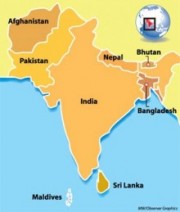
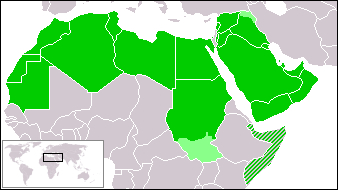
The European Union is bogged down by the war in Ukraine, immigration issues, political polarization, trade headwinds, and attacks from Trump. The South Asian Association for Regional Cooperation rarely meets, and even when it does, members keep contentious topics off the table. The African Union faces persistent crises, such as terrorism and civil wars in member countries, and significant hurdles to regional economic integration. The Arab League and the Gulf Cooperation Council, too, are beset with internal divisions and regional conflicts.
Yet regional governance remains the best antidote for weakening multilateralism. It is an essential building block of global governance and has a long history of supporting international cooperation. Since the end of the Cold War, regional institutions have expanded, and their role in facilitating trade, resolving conflicts, and developing shared standards has grown. Now they must support weakened global institutions and take on more responsibilities themselves. This shift will not only help sustain multilateralism but could also improve on it, by harnessing regional strengths and facilitating innovative, bottom-up solutions to the world’s most intractable problems.
LATIN AMERICA:
Javier Milei Announces Creation of Regional Bloc to Stand up to the ‘Cancer of Socialism’
‘ALREADY A GROUP OF TEN COUNTRIES WORKING ON IT’

Breitbart, Jan 2, 2026 – President of Argentina Javier Milei revealed in a soon-to-be released interview he is actively working towards establishing a regional ten-country bloc in Latin America to stand up to the “cancer of socialism.”
Milei was interviewed by journalist Andrés Oppenheimer this week for Oppenheimer’s television show at CNN en Español…. “We haven’t named it yet, but there is already a group of ten countries working on it, and we will continue to move forward,” Milei said….
The newspaper noted that the Argentine government is “enthusiastic” about the evident shift in ideological trends across the region and is seeking to emphasize similarities with other potential members of the group — particularly in light of the upcoming elections in Brazil and Colombia, two nations presently led by socialist governments whom Milei has had past impasses with.
See older article links, summaries in NEWS ARCHIVE


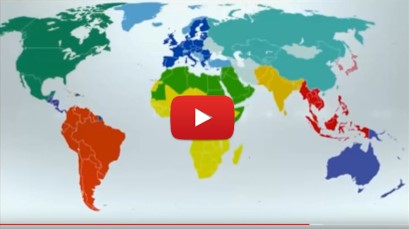
VIDEO: GLOBAL SHAKEDOWN (2015)
The world’s developing and projected regional blocs. (Excerpt @ 20:15 of 27:33)
TERMINATE USMCA
The 2020 ratification of the USMCA “free trade” agreement,” scheduled for review in 2026, created a “problem”:
China and others have been circumventing U.S. customs protection via import dumping into Mexico and Canada.
But the “solution” currently being offered by U.S. Trade Representative Jamieson Greer is even further integration, by “enhancing economic security alignment on tariffs.”
Treasury Secretary Scott Bessent also favors tariff alignment into a “Fortress North America” economic security bloc.
Incredibly, this incremental regionalism/globalism is being perceived as an assertion of Trumpian U.S. nationalism across the continent.
A fully aligned, common-external-tariff structure among the three North American nations would constitute a “customs union.” That would be level two of the “five levels of economic integration,” taught in international business and other programs at universities throughout the world.
The USMCA “free trade” agreement is level one:

This would take North America another step down the same incremental, Hegelian-dialectic, crisis-creating path upon which Jean Monnet pushed European nations to bring about the European Union.
In that regard, the “five levels of economic integration” is a misnomer. The more accurate label is “five steps to political union,” in which national sovereignty would be incrementally surrendered – via “free trade” – to the world’s multinational, regional blocs.
USMCA doesn’t need to be renegotiated. It needs to be terminated.
Kissinger’s false choice:
‘world order’ or ‘competing regional units’:
The ‘new mercantilism’ of emerging regional blocs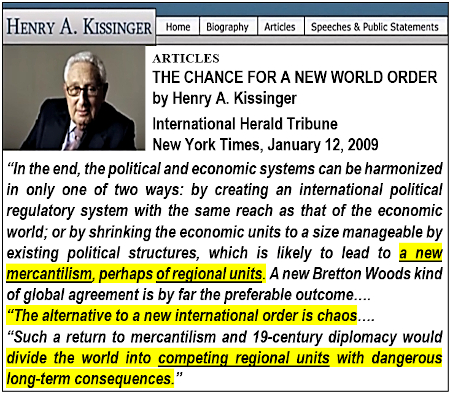 ‘WARS AND RUMORS OF WARS’

“AND AT THE SAME TIME THE CONSCIOUSNESS OF BEING AT WAR, AND THEREFORE IN DANGER, MAKES THE HANDING OVER OF ALL POWER TO A SMALL CASTE SEEM THE NATURAL, UNAVOIDABLE CONDITION OF SURVIVAL.”
George Orwell’s 1984, Part 2, Chapter 9 (Goldstein manifesto, “The Theory and Practice of Oligarchical Collectivism”)

REGIONAL RIVALRIES IN A MULTIPOLAR WORLD: COMPETITION, CONFLICT, ‘PERPETUAL WAR’
The Ukraine war is triggering the next stage in globalism’s great Hegelian dialectic. If nations fall for globalist Henry Kissinger’s “new mercantilism” of “competing regional units,” then nationalism will not subdue globalism–the ultimate antithesis to nations. Instead, EU-style regional blocs will become the globalists’ synthesis of both, and regional infrastructures will continue to usurp nations’ sovereignty.
“Regionalization” may appear to be a setback for globalists’ goal of “one-world government.” But Machiavellian globalists believe that imposed conflict among their emerging regional blocs will strengthen their world order in the long term.
‘…BREAK IN PIECES AND BRUISE’
Machiavellian globalists are using war mongering and mercantilism to prompt emerging blocs to jostle against each other, pressuring the blocs to further strengthen and develop simultaneously, in response to economic competition and perceived security threats from other blocs. This crisis pretext is being used to spook populations into allowing regional institutions to consolidate power and regulatory control of resources away from the sovereignty of each bloc’s member nations, as has already occurred in the European Union.
 ‘THESE HAVE ONE MIND’
Once consolidation of power within regions has occurred, alliances with other blocs can be forged. All the blocs can then be tied into an authoritarian “New World Order” federation of regional blocs, with minimal resistance.
THE NEW MERCANTILISM: ‘ORDER OUT OF CHAOS’
As was typical of historic mercantilism, media reports within both sides of today’s Ukraine crisis acknowledge that military/economic threats from the other region are useful in the deeper integration/consolidation of power within their own regional bloc. Here are some examples:
● THE GREAT EURASIAN ECONOMIC REALIGNMENT Sanctions may accelerate Russia’s economic integration with Asia
● EUROPEAN UNION AMBASSADOR SAYS RUSSIA-UKRAINE CRISIS HAS UNIFIED THE EU AND NATO: ‘FOR US, THIS IS EXISTENTIAL’ – CBS News, Feb 16, 2022 – “I think Russia thought it could divide and conquer us, and it has actually united the European Union and NATO more than we have arguably been ever before,” he said.
● WESTERN SANCTIONS AGAINST RUSSIA MAY BOOST EURASIAN ECONOMIC UNION – RT (Russia Today), March 20, 2014 – “What would then happen is that the Eurasian Economic Union would accelerate in scale very rapidly.”
● ‘THANK YOU, MR PUTIN’ – DW (Deutsche Welle, Germany), March 21, 2014 – “With your annexation of the Crimea you have thrown a much-needed lifeline to…European integration…”
● VLADIMIR PUTIN: HERO OF THE EUROPEAN UNION – Breitbart, March 14, 2014 – “Vladimir Putin’s adventurism in the Ukraine has had a strange side effect: it may well have prolonged the life of his chief rival and antagonist – the European Union…”
‘you’re going to see regional orders spring up’
“I think you’re going to see the evolution of regional organizations, and that regional – because it’s so hard to create a world order – I think you’re going to see regional orders spring up. And then you would have links between regional orders. But they will be very much guided by economic interests, social interests and also security interests….” Frederick Kempe, President and CEO of the Atlantic Council Comments at the World Government Summit, March 29, 2022 (Video excerpt starts at 17:11)
 WOMAN RIDES THE BEAST, “HAVING SEVEN HEADS, AND TEN HORNS” Revelation 17:3
 VIDEO: BLOC HEADS Part 1 of 10: Intro (Africa), European Union (2013) 13:32
King Neb’s ‘Feet and Toes’? Daniel 2: 40-45
GLOBALIZATION ISN’T AS DEAD AS YOU THINK | OPINION
‘REGIONAL HUBS WILL CREATE A WORLD LED BY TWO NEARLY EQUAL POWERS, SURROUNDED BY TRADE SATELLITES’
Penn Live, May 12, 2023 (Pittsburgh Post-Gazette, June 7) – The notion of the ‘one large power’ is over. The idea is that globalization could never have been a monolith – a self-sustaining whole but rather something that is interrelated with local and regional needs. Regional hubs will create a world led by two nearly equal powers, surrounded by trade satellites – one we expect to be a U.S.-led side that includes USMCA, Latin America, and Europe. The other, a Chinese-led side that will include Asia-Pacific, Central Asia, and parts of Africa.
The writer’s number of regional “satellites” is short of the roughly ten major regional blocs that are in existence today. They are still in a state of flux, conflict, development and consolidation of power, but the Bible’s latter-day scenario of ten contemporaneous kingdoms is coming into view.