BOOKMARK THIS PAGE FOR RECENT UPDATES – REGION NEWS INDEX – NEWS ARCHIVE – Commentary in italics.
EU and REGIONAL PROTECTIONISM:
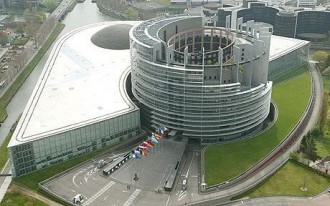
UK is prepared to align with EU tariffs on Chinese EVs, minister indicates
TO SECURE ACCESS TO BRUSSELS’ ‘MADE IN EUROPE’ INDUSTRIAL PROGRAM
Politico.eu, Oct 15, 2026 – U.K. Trade Minister Anas Sarwar has said Britain and the European Union must “work together and act in lockstep” to tackle China’s dominance in the automotive sector.
The comments mark the clearest signal yet that the U.K. government is prepared to align with EU tariffs on Chinese electric vehicle imports in order to secure access to Brussels’ Made in Europe industrial program.
AFRICAN UNION:
Opinion: A united Africa: the key to shaping our future
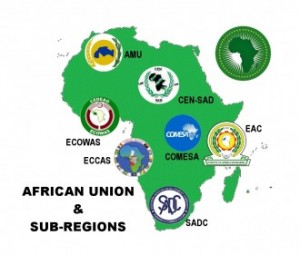
ADDRESS ILLEGAL IMMIGRATION BY SIMPLY MAKING IT LEGAL
‘ALLOWING PEOPLE TO MOVE LEGALLY WITHIN THEIR OWN CONTINENT’
Nkosazana Dlamini-Zuma, IOL, Oct 15, 2026 –
For us to unite, we must also have free movement within the continent.A protocol on the free movement of people was agreed upon in 2018, but only a few countries have ratified it.
Once there is free movement, trade will also become easier because people will be able to move across borders more freely….
I believe that free movement can also help address what we call illegal immigration by allowing people to move legally within their own continent and do what they need to do where they need to do it….People can enter and leave legally.That is part of uniting Africa. A united Africa will be able to determine and shape the future world order.
Nkosazana Dlamini-Zuma was Chair of the African Union Commission 2012-2017.
SE ASIA – ASEAN:
Trump to attend ASEAN-related summits in Manila
TO DEMONSTRATE CONTINUED US SUPPORT FOR BLOC

Thai PBS World, Oct 15, 2026 – US President Donald Trump will attend the 49th ASEAN-related summit in Manila on Nov. 16-18 to demonstrate continued US support for the bloc, which is projected to become the world’s fourth-largest economy within the next five years, according to diplomatic sources familiar with the matter.
The sources, who requested anonymity, said the Philippines, as ASEAN chair, recently rescheduled the summits from November 11-13 to November 16-18 following lengthy negotiations over Trump’s participation….
According to the sources, the ASEAN Economic Community Strategic Plan 2026-2030 projects that ASEAN’s single market, with a population of around 700 million, will become the world’s fourth-largest economy.
SOUTH ASIA:
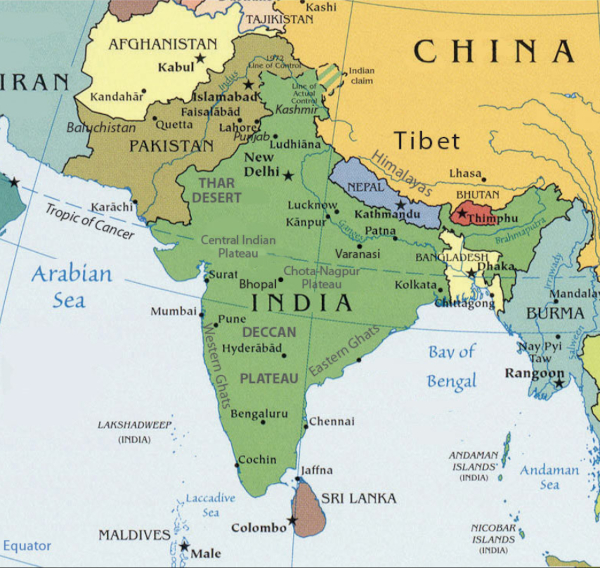
From Delhi to Kathmandu: A New Push for BIMSTEC

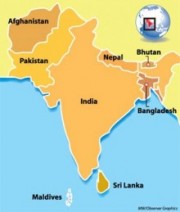
Republica (Nepal), Oct 14, 2026 – The first-ever BIMSTEC Home Ministers’ Meeting, held in New Delhi on October 13, marks an important moment in the evolution of regional cooperation across South and Southeast Asia. Nearly three decades after its establishment, the seven-member grouping is moving towards a more coordinated approach to challenges that no country can effectively address alone. With India providing leadership and its regional partners bringing their own strategic strengths and priorities, BIMSTEC has an opportunity to emerge as a consequential platform for security, connectivity and economic progress….
The grouping brings together Bangladesh, Bhutan, India, Myanmar, Nepal, Sri Lanka and Thailand…. Thailand provides an important link to Southeast Asian markets.
CHINA-PAK:
First China-Pakistan army joint training features an all-Chinese equipment lineup, signaling deep interoperability: expert
Global Times (China), Oct 14, 2026 – The first China-Pakistan army joint training Karakoram 2026 kicked off on Wednesday, with all weapons and equipment provided by the Chinese side, China Central Television’s (CCTV) military channel reported. A military affairs expert said the choice of medium-weight wheeled vehicles for high-altitude operations, and Pakistan’s use of an all-Chinese lineup, signal deepening military trust and potential future procurement….
From a broader perspective, it also reflects strategic mutual trust, showing that military cooperation between the two countries has reached a high level. Building this kind of deep interoperability will lay a solid foundation for future joint operations between the two armies in counter-terrorism, border control and other areas, the expert said.
AFRICAN UNION – SADC:
SADC Urged to Deepen Regional Integration for Critical Minerals Value Addition

Southern African Development Community member states must deepen regional integration if they are to convert the region’s critical mineral endowment into commercially competitive value chains, according to Mining Weekly….
As global demand for critical minerals rises amid the energy transition, Southern Africa’s copper, cobalt and lithium resources are described as offering scope to build industrial linkages spanning mining, processing, manufacturing and services. The central difficulty identified is turning mineral wealth into value chains that keep more value locally, create employment and link enterprises across member states.

FROM THE UN:
Latin America’s energy transition needs regional power
UNU-CRIS REPORT ASSESSES HOW SIX REGIONAL BLOCS COULD ADVANCE LATIN AMERICA’S ENERGY TRANSITION
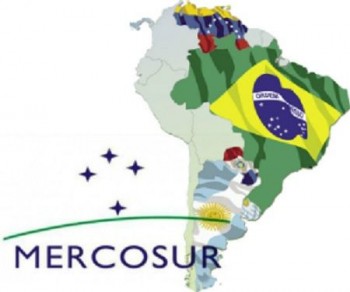

United Nations University, Oct 13, 2026 – Assessing six regional schemes, the report finds SICA furthest ahead, with its SIEPAC interconnection system and 2030 Sustainable Energy Strategy. CARICOM, the Andean Community and MERCOSUR show potential, while the Pacific Alliance and CELAC lag behind. Paradoxically, MERCOSUR hosts the region’s most interconnected systems, yet manages them bilaterally rather than through common rules.
The report urges governments to harmonise regulation, seek multilateral financing as a bloc, and treat energy security as a shared regional concern rather than a matter of national autonomy.
GCC’s REGIONAL PROTECTIONISM:
GCC Economic Unity: Customs Union and Common Market Push for Competitiveness

‘INTENDED TO PRODUCE TANGIBLE RESULTS IN THE ECONOMIC INTEGRATION JOURNEY’
Index Box, Oct 12, 2026 – Accelerating pathways toward economic unity and completing the Customs Union and the GCC Common Market are essential pillars for strengthening the competitiveness of Gulf Cooperation Council economies, according to the Secretary-General of the Gulf Cooperation Council, Jasem Albudaiwi, as reported by the Saudi Press Agency.
Albudaiwi emphasized that the Permanent Preparatory Committee at the ministerial level of the Economic and Development Affairs Authority plays a growing role in advancing and monitoring these projects by formulating policies, initiatives, and practical programs intended to produce tangible results in the economic integration journey among GCC member states.
EURASIAN ECONOMIC UNION, IRAN:
Iran ready for long-term partnership with Eurasian Economic Union: VP Aref

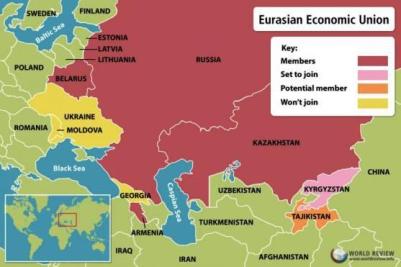
OANA (Org of Asia-Pacific News Agencies), Oct 3, 2026 – Iran is ready to play an active, constructive and responsible role alongside member states of the Eurasian Economic Union (EAEU), First Vice President Mohammad Reza Aref said in a message to the EAEU Intergovernmental Council’s meeting.
Aref said Iran was prepared to become an active, reliable and long-term partner in expanding economic and regional cooperation with the bloc.
SE ASIA:
Time for ASEAN to Revive its Customs Union Vision
The Diplomat, Oct 2, 2026 – As tariffs once again become bargaining tools for major powers, one of ASEAN’s key weaknesses is the fragmentation of its market across national tariff regimes. The revival of the Common External Tariff (CET) proposal, rejected four decades ago, raises a fundamental question: can ASEAN move beyond a mere “collection of assembly hubs” to become a higher-value-added economic region and a negotiating actor in its own right?….
Under a fully functioning customs union, goods imported from outside the region could, after paying the common external tariff upon entering ASEAN, circulate freely within the bloc in principle….
At a time when major powers are once again weaponizing tariffs, a common external tariff and unified negotiating authority would give ASEAN greater collective bargaining power as a single economic bloc. A customs union would be more than a foundation for industrial upgrading; it could also become a powerful shield for ASEAN against tariff coercion.
EAEU, CENTRAL ASIA:
Commentary: Moving beyond Eurasian Economic Union: Case for Central Asian common market
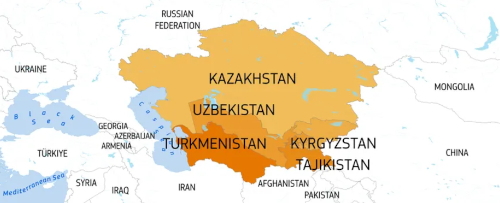
Eurasianet, Sep 29, 2026 – Russia has never acted like the EAEU is a grouping of equals. The Kremlin treats the EAEU as an instrument of geopolitical coercion, taking advantage of free-trade provisions when expedient, and erecting obstacles when wanting to bring a fellow member state into line.
For a majority of members – Armenia, Kazakhstan and Kyrgyzstan – the EAEU has not come even close to realizing its original promise, delivering neither free trade nor the free movement of labor….One option to consider is a Central Asian common market, one that establishes a single regional trade bloc with uniform customs procedures and which does not have an outside power – whether Russia, China, the United States, the European Union or Turkey – trying to steer the direction, pace and scope of commerce….
One example is the Silk Seven Plus, which imagines a Central Asian economic bloc stretching from the Caspian to the Arabian seas. The S7+ comprises the five Central Asian states and Azerbaijan at its core, later incorporating Afghanistan, and, farther down the road, Pakistan, into the trade framework.
FORTRESS NORTH AMERICA:
Opinion: The U.S.-Canada trade war is really about what alignment means – and about China, too

‘ALIGNMENT WAS NOT A CONCESSION INVENTED AT THE NOGOTIATING TABLE’
The Globe and Mail (Canada), Sep 24, 2026 – As Michael Froman, Barack Obama’s trade representative, explained in an August interview on CNN, Washington is “pressing Canada, as well as other countries, to adopt a common approach vis-à-vis China – whether it’s a common external tariff or export controls, or ensuring that Chinese products, inputs, don’t get inserted into products in Canada that will then be imported into the United States.”
Omitting that detail leaves Canadians with the impression this is only a brouhaha about trucks, dairy quotas and Mr. Trump’s animosity, when it is also about our entanglement with China. The market access that China’s firms extracted from Ottawa in January provides a rationale for the American trade measures….
Canadian officials have been suggesting deeper co-operation on security and defence in return for restored trade access for more than a year…. And U.S. Trade Representative Jamieson Greer has said that Washington was ready to “bear hug [Canada] on this idea of Fortress North America.”….
But then, at the 11th hour, U.S. officials demanded “a say in our future trade agreements with other countries,” as the Prime Minister said, and to have this power automatically and indefinitely, overriding existing agreements.
EU and REGIONAL PROTECTIONISM:
EU urges UK to raise tariffs on Chinese cars to avoid ‘made in Europe’ barriers
Financial Times (London), Sep 24, 2026 – Brussels has warned Andy Burnham that Britain would need to raise tariffs on Chinese cars and align more closely with EU trade policy if it wants to avoid “made in Europe” barriers that would hit key exports….
“A customs union would solve most of the problems of ‘made in Europe’,” said an EU official. “And also the question of tariff differences, which leads to fears the Chinese could avoid our tariffs by routing through the UK.”
The “made in Europe” policy is intended to favour EU manufacturers on subsidies and public procurement in an effort to defend the bloc against competition from China.
SE ASIA – ASEAN:
Why ASEAN’s coming digital economy trade agreement deserves your attention
Fortune, Sep 23, 2026 – Earlier this year, the Association of Southeast Asian Nations (ASEAN) concluded negotiations on the Digital Economy Framework Agreement, or DEFA—the world’s first comprehensive, region-wide agreement dedicated to the digital economy. The pact is expected to be signed at the ASEAN Summit this November, when leaders from the group’s 11 member states will converge in Manila.
DEFA may sound like the sort of acronym-laden agreement that disappears quickly from the headlines. It should not. The agreement is an attempt to do for the key elements of modern digital trade—data, digital payments, e-commerce, online consumer protection, and AI—what trade agreements once did for ports, tariffs and containers: create common rules and standards to drive seamless commerce across borders….
Asia’s next great growth story won’t be a single country growing into “the next China.” It will be a region—ASEAN, in this case—finding ways to connect itself and reaping the rewards of that closer integration.
‘Fortress North America’ is the latest Canadian con
TRUMP DIDN’T THREATEN CANADA’S SOVEREIGNTY; CARNEY JUST HANDED IT TO BEIJING
By Allen West, Washington Examiner, Sep 10, 2026 – ….In fact, the concept of “Building Fortress North America” is described as “Ontario’s North American Growth Plan” on the Ontario government’s website.
President Donald Trump has spotted this scam plainly, recognizing that “Canada has been ripping us off for a long time on trade.”….
It is vital that those negotiating on the United States’ behalf recognize it too and don’t fall for the niceties being pushed by the Canadians and, right behind them, the Mexicans. Recent history has shown us without a doubt that neither of these countries will hesitate to leave the back gate to the fortress open for the Chinese to sabotage it from the inside….
Aluminum is a prime example. Importers were able to exploit loopholes created by the failed exemptions and exceptions under the Biden administration. Instead of declaring the full value of items such as finished aluminum products, they reported only the value of the raw aluminum content, ignoring the huge value added through processing and manufacturing. The result? Products flooded into the U.S. at artificially low tariff rates, weakening the very protections designed to support domestic producers and their American workforce….
Before the loophole was closed, it was exploited by countries that used willing partners in Mexico to boost aluminum extrusion imports into the U.S. from Mexico by 46% from 2021 to 2024. The surge had devastating effects on America’s aluminum extrusions industry, resulting in plant closures, layoffs, and curtailments, adding American aluminum extrusions to the long list of products flooding across our southern border and decimating communities across America’s heartland.
Combined, these threats to U.S. national security and our supply chains exemplify the need for strong trade enforcement. We cannot afford to allow loopholes to erode our industrial base. Trump’s executive order to correct the valuation issue demonstrates the kind of leadership required to fight illegal foreign trade practices….
The “Fortress North America” Mirage: Why Tariff Harmonization Will Never Work
GREER: ‘CANADIAN OFFICIALS HAVE BEEN COMING TO WASHINGTON ADVOCATING A “FORTRESS NORTH AMERICA”— THEIR TERM, NOT MINE’
Full interview, transcript of U.S. Trade Representative
Jamieson Greer’s interview with CBC News
This article explains why substituting a common North American external tariff for U.S. home-market tariffs is a fruitless, counterproductive goal—and why tariff-harmonization efforts to date have proved immensely harmful to American manufacturing.
Corporation for a Prosperous America, Sep 8, 2026 – [U.S. Trade Representative Jamieson Greer] was clearly exasperated following the Canadian pivot. “For a year and a half,”Greer told CBC, Canadian officials have been coming to Washington advocating a “Fortress North America” — “their term, not mine.” If the United States is going to lower its national-security tariffs for Canada, it expects its partners to “also protect their borders.” What USTR wants is “mutual protection”: “we can’t have Canada be a place where you can get flooded with steel and aluminum from other countries and be used as a back door into the U.S.”
Greer doubled down on calling out Canada in his CBC interview: “Fortress North America, you can say it, but when it gets down to brass tacks and you want to actually collectively protect this market and these critical sectors, they’re not gonna do it.”Thank heavens. Greer was correct in his expectation, but it’s been clear for a decade that neither Canada nor Mexico would pull back tariff concessions in their other FTAs.
This article explains why substituting a common North American external tariff for U.S. home-market tariffs is a fruitless, counterproductive goal—and why tariff-harmonization efforts to date have proved immensely harmful to American manufacturing….
The“Fortress North America” pitch is understandable to anyone who grew up playing Risk, the classic board game. Consolidate the continent to unlock tremendous gains! But in the real world there is no prospect of a genuine North American tariff perimeter, and forgoing important sectoral tariffs for more ‘rules of origin’ was always going to be a terrible trade.
EUROPEAN UNION – REGIONAL PROTECTIONISM:
EU unveils ‘buy European’ public procurement rules to counter China
BUT NO BINDING QUOTAS, UNLIKE EARLIER ‘CLEAN TECH’ RULES
The Guardian, Sep 9, 2026 – The new rules will oblige public buyers in the EU to put more emphasis on quality and metrics such as environmental sustainability and local supply chains, rather than opting for the cheapest bid….
Brussels is concerned about inroads Beijing is making into European markets for transport and infrastructure, especially Chinese firms benefitting from state subsidies that make them cheaper than European alternatives.
Trump’s Expanded US Map Includes Territories Locked in Dispute With Canada
Newsweek, Sep 8, 2026 – While the AI-generated image may be read by many as a tongue-in-cheek message regarding the White House’s “America First”-imbued pivot to a more assertive hemispheric posture, dubbed the “Donroe Doctrine” after the two-century-old Monroe Doctrine, Trump’s intensification of a deepening trade war with Canada on Monday underlined real-world tensions emerging between Washington and its northern neighbor.
This same Republican Party used to be terrified in the 2000s that elites were secretly planning to unite Canada, America and Mexicohttps://t.co/KxNd2lCR20
— Nick Field (@nick_field90) September 7, 2026
ARAB GULF, GCC: ‘REGIONAL HEALTHCARE’ :
GCC Health Ministers Advance Regional Health Integration at Bahrain Meeting
COLLECTIVE HEALTH POLICY ACROSS SIX-MEMBER BLOC
Diplomatic Insight, Sep 8, 2026 – Health ministers from the Gulf Cooperation Council states have discussed measures to deepen regional health integration and strengthen collective preparedness, with strategic medical stockpiles, health insurance, virtual healthcare and a joint anti-drug strategy among the priorities reviewed at their 12th ministerial meeting in Bahrain….
Coordination on health insurance and the implementation of a common anti-drug strategy similarly demonstrate the expanding scope of collective health policy across the six-member bloc.
Iran, Eurasian Economic Union discuss expanding trade
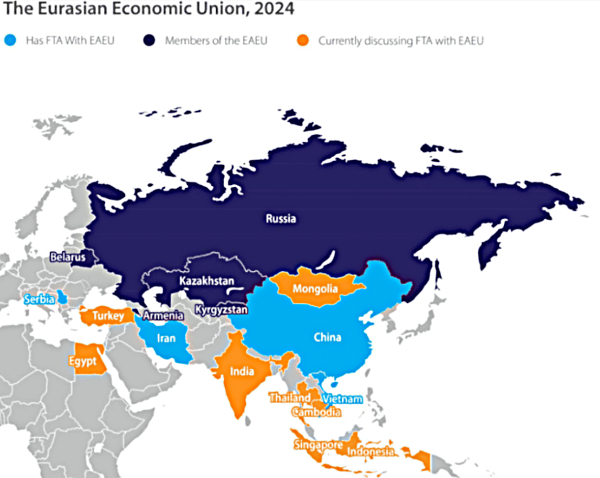
Islamic Republic News Agency, Sep 8, 2026 – Seyed Ali Madanizadeh, Iran’s minister of economic affairs and finance, met with Bagit Jan Sagintayev, chairman of the executive board of the Eurasian Economic Commission, the EAEU’s highest-ranking official on Monday.
During the meeting, the two sides emphasized their joint determination to develop cooperation….
The free trade agreement between Iran and the EAEU came into effect in May 2025….
Under the agreement, customs duties on 87% of goods traded between the sides were eliminated.
Russia, Belarus, Kazakhstan, Kyrgyzstan and Armenia are members of the EAEU, while Iran is an observer member of the bloc.
European Union halts imports of Brazilian goods including beef
ABC News, Sep 3, 2026 – Brazilian exporters of meat, poultry, eggs, honey and other animal products were scrambling Thursday after a European Union deadline passed for suspending imports over concerns about the use of antibiotics and antimicrobial drugs in livestock.
The EU announced the suspension Tuesday. Brazil, the world’s largest beef exporter, shipped about 108,000 tons of beef worth about $1 billion to the EU in 2025, according to government figures.
NORTH AMERICA:
Dairy Industry Pushes for USMCA Enforcement, Not Escalation
‘CANADA MUST FOLLOW THROUGH ON THE DAIRY ACCESS COMMITMENTS’

‘CANADA IS NOT UPHOLDING THE AGREEMENT THAT THEY SET FORTH TO DO SO IN THE USMCA SIGNING’
Southern Farm Network, Sep 1, 2026 – Dairy leaders want Canada held accountable under USMCA while preserving the trade agreement. Edge Dairy Farmer Cooperative Chief Policy Officer Karen Gefvert says the industry is actively engaged with federal officials….
Gefvert says the industry’s message has remained consistent since the U.S.-Mexico-Canada Agreement took effect: Canada must follow through on the dairy access commitments it agreed to under the trade deal.
“Our message has been this entire time: hey, Canada is not upholding the agreement that they set forth to do so in the USMCA signing. So, they’ve got some dairy commitments that they have not fulfilled. And that does include this TRQ administration. They also agreed to some transparency.
And then, the way in which they have pricing set up in Canada. So those components have been disingenuous perhaps might be the way in which to phrase that. So the messaging to our administration has been: hey, Canada’s got to come and uphold the agreement that they signed and we need to do that. We do support the enforcement of the agreement.”
How Trump’s lumber tariffs made a bad situation worse in B.C.

U.S. LUMBER INDUSTRY’S OBJECTION TO CANADIAN SUBSIDIES BEGAN IN 1982
CBC (Canadian Broadcasting), Aug 28, 2026 – The U.S. has long argued that the low stumpage fees charged by Canadian governments amount to a subsidy that allows Canadian lumber to be sold in the U.S. at below-market value.
But Zoltan van Heyningen, the executive director of the U.S. Lumber Coalition, says these differences account for “one tiny, small aspect of Canadian subsidies,” arguing the Canadian government has spent billions in taxpayer dollars in the last year supporting the industry.
In his view, the problem is one of chronic excess supply on the Canadian side, which ends up in the U.S. and drives down prices, harming American producers.
The American lumber industry first made this argument to the U.S. Commerce Department in 1982, out of concern over Canada’s growing share of the U.S. market. The request was for tariffs on Canadian softwood lumber to level the playing field.
SOUTH AMERICA, MERCOSUR:
Argentina Gives Mercosur an Ultimatum It Can’t Ignore
MILEI WANTS FREE FROM BLOC’S COMMON EXTERNAL TARIFF, REGIONAL PROTECTIONISM
Cato Institute, Aug 28, 2026 – In Argentina, talk of leaving or at least bypassing Mercosur—the South American trade bloc that also includes Brazil, Paraguay, and Uruguay—is ramping up as the Javier Milei administration seeks to open the country’s economy….
When Milei became president, Argentina ranked among the five most closed economies in the world. Since then, he has made progress towards free trade….
But Mercosur’s common external tariff, which averages at 11.5 percent, means Argentina cannot unilaterally cut its own tariffs beyond the limit set by that trade accord. In practice, this represents about ten times the rates of Chile and Peru.
FEDERAL RESERVE BANK OF DALLAS:
USMCA trade outlook matters for the U.S., not just for Canada and Mexico

FORTRESS NORTH AMERICA SCENARIO: COORDINATED EXTERNAL TARIFFS
Federal Reserve Bank of Dallas, Aug 26, 2026 – The USMCA already covers many non-tariff areas, but a full customs union would require coordination on external tariffs and third-country agreements, as well as tariff revenue sharing. It is therefore best viewed as a benchmark. A more practical step is targeted tariff coordination (especially vis-à-vis China) that preserves USMCA preferences and may lower pressure to tighten origin rules further….
Under targeted coordination, Canada and Mexico match U.S. January 2026 tariffs against China. Under coordinated tariffs, a so-called Fortress North America scenario, Canada and Mexico match the U.S. January 2026 external tariff schedule against all non-USMCA partners.
These scenarios borrow one customs-union feature, aligned external tariffs. But they don’t include its institutions: no common tariff-setting authority, customs administration or revenue sharing. The narrower goal is to reduce incentives for China or other non-USMCA suppliers to reach the U.S. market indirectly through Mexico or Canada while preserving North American trade preferences under USMCA….
A tariff on a final good may protect domestic producers, but tariffs on imported parts, materials or equipment raise costs. An appliance producer may gain from tariffs on imported appliances but lose if tariffs raise the cost of motors, steel or electronics.
Doug Ford reflects on heated exchanges with Donald Trump
‘LET’S BUILD FORTRESS NORTH AMERICA’
Toronto Sun, Aug 25, 2026 A significantly calmer Ontario Premier Doug Ford made a handful of appearances on American television on Tuesday….
“I think it’s a lot of rhetoric because we’re the No. 1 customer to 17 states, and No. 2 to 12 others,” Ford told [CNN’s Wolf Blitzer]. “… I feel that we need to get back to the table and build the, as I always say, Fortress North America….”
“We’re stronger together, I always say,” Ford told [Fox Business]. “Let’s build Fortress North America….”
SE ASIA – ASEAN:

Digital IDs can connect ASEAN

ALMOST ALL ASEAN NATIONS DEVELOPING DIGITAL IDENTITY WALLET
‘ASEAN ID’ NOT NEEDED; DIGITAL ALIGNMENT OF NATIONAL IDs CAN CONNECT THEM
World Bank Blogs, Aug 25, 2026 – The next step is to make these national systems work together. ASEAN does not need a single regional system or wallet. Rules on trusted issuers, wallet communication, privacy, security, and testing aligned with global standards can connect them, much as linked payment systems support cross-border payments. Europe shows what is possible: by the end of 2026, every EU Member State is expected to offer a wallet built to common specifications. Global alignment would also help ASEAN credentials work beyond the region and trusted foreign credentials within it.
‘FORTRESS NORTH AMERICA’:
Ontario premier gaslights Americans: Shows contempt for Trump national tariffs; pushes North American tariffs
FORD: CANADA SHOULD BE READY TO CUT ELECTRICITY, CRITICAL MINERALS AS TRADE WOES WORSEN
Newsweek, Aug 24, 2026 – Canada’s Ontario Premier Doug Ford said former U.S. President Ronald Reagan would be “throwing up” over the trade policies of President Donald Trump. It is just the latest in a series of comments from Ford speaking out against Trump and his policies.
In an interview with The Associated Press, Ford said Trump keeps a portrait of Reagan—a consistently popular Republican president who championed free trade—near his desk, but that the late leader would be “disgusted with President Trump.”

Referring to Trump’s tariffs and interventionist measures, which he says are at odds with Reagan’s economic policies, Ford added, “[Reagan would] be throwing up on him from the picture if he knew what was going on.”
What is the ‘Fortress North America’ idea Doug Ford is pitching?
THE WALLS OF THE FORTRESS WOULD BE TARIFFS
London Free Press, June 9, 2026 – “We’re down here promoting something called ‘Fortress North America,’” Ford told CNN’s Wolf Blitzer during a live interview Tuesday.
“We have two of the greatest countries in the entire world, and when we work together there is nothing that can stop us. China can’t stop us.”
The basic idea is that the U.S., Canada and Mexico would eliminate tariffs and maintain free trade between them while aligning regulations to allow certain industries to become more integrated. The walls of the fortress would be tariffs and other policies designed to protect the integrated North American economy from outside competition, particularly from China.
Premier Ford brought a 30-page brochure on the trip. Among its proposals: ….
— Crack down on efforts to circumvent tariffs and on “the practice of naked short-selling and foreign investments tactics” that hurt the mining industry;
— Screen investments from China or “other non-market economies” in mining or the defense industries;
— Forbid attempts by the Chinese government or its state-owned enterprises from gaining a foothold in North America….
ARAB GULF, MIDDLE EAST:
Can Mecca Pact deepen its role in Gulf’s security structure?
Daily Sabah (Türkiye), Aug 21, 2026 – The Mecca Joint Defense Agreement, signed by Saudi Arabia, Türkiye, and Pakistan, is formally framed as an open-architecture agreement. However, that openness has yet to translate into the integration of a regional country into its institutional framework. The real question worth asking is whether it can expand within the Gulf itself, and whether it will do so alongside the Gulf Cooperation Council (GCC) or in tension with it….
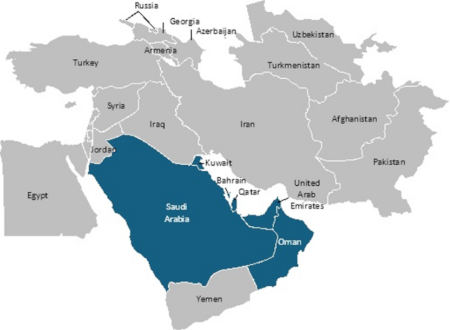
On paper, the GCC has a defense component, but in practice, it has struggled to translate that into deployable, credible collective action, particularly in hard security and defense coordination rather than economic or diplomatic matters. As part of a Gulf security framework, the Mecca Pact, built around a single anchor state in the Gulf and two capable external partners, offers something more concrete on that specific dimension, even if its own obligations remain deliberately loose.
Whether the pact and the GCC end up running hand in hand, or pulling Gulf states in different directions, depends on whether the GCC itself modernizes its own security cooperation in response.
Trump praises Mecca defense pact between Saudi Arabia, Türkiye and Pakistan
‘IT SHOWS HOW THE MIDDLE EAST IS COMING TOGETHER’
Türkiye Today, Aug 17, 2026 – U.S. President Donald Trump on Sunday praised a newly signed defense agreement between Saudi Arabia, Türkiye and Pakistan, calling it a “BIG, BOLD, AND IMPORTANT FIRST STEP” toward greater self-reliance in the Middle East.
In a post on Truth Social, Trump wrote that he was “very happy to see” the three countries “recently, and finally” sign what is known as the Mecca Joint Defence Agreement.
“It shows how the Middle East is coming together, and how Countries will finally be able to defend themselves in a more meaningful way,” he wrote….
EUROPEAN UNION:
Quo Vadis, Europe: A New Dark Age or the Next Renaissance?

European Conservative, Aug 11, 2026 – European leaders are appalled that Washington finally said out loud what their citizens whisper to one another at kitchen tables, pubs, and churches: “We are being replaced.” Replaced not by race or ethnicity. Such superficial markers don’t determine the fate of nations. Replaced by cultures shaped by political corruption, violence, misogyny, and contempt for human rights….
Uncounted multitudes have fled the misery of their homelands only to bring with them the very attitudes and habits that produced the cesspools they are leaving behind. It’s not that European elites embrace the uninvited illegal aliens’ values. They just despise their own. A civilization ashamed of itself cannot ask others to assimilate into anything meaningful. And so they don’t….
It’s easy to blame the EU governments. The deeper problem is the voters who supinely accept the tyranny of their bureaucracies, outsourcing everything that shapes their present and future to people who neither love their nations nor understand them.
‘REGIONAL SOVEREIGNTY’:
Gulf Cooperation Council countries intensify coordination after series of attacks
‘In accordance with the UN Charter’s Article 51,’ bloc notifies UN of ‘sovereign right to collective self-defense’
News on AIR (India), March 12, 2026 – Gulf Cooperation Council countries are intensifying coordination after a series of attacks that have pushed the region into one of its most serious security crises in decades. Officials say the bloc has shifted from diplomatic mediation to a posture of active defence following the escalation that began on the twenty-eighth of February.
During the emergency consultations, GCC leaders reaffirmed the principle of “indivisible security”, stating that the security of all member states is interconnected and that any attack on one member is considered an attack on all. The council has also activated provisions of its joint defence agreement, increasing cooperation in air defence coordination, intelligence sharing and maritime monitoring, particularly in areas around the Strait of Hormuz.
This mobilisation specifically invokes Article 2 of the GCC Joint Defense Agreement, which mandates a collective military response to external aggression against any member state. Furthermore, in accordance with the UN Charter’s Article 51, the Council has formally notified the Security Council of its sovereign right to collective self-defense following the confirmed interception of thousands of hostile drones and missiles since February 28.
MIDDLE EAST, GCC:
Which other countries could join the Turkiye-Saudi-Pakistan defence pact?
FMR QATAR PM: HOPE THAT ALL GCC MEMBER NATIONS JOIN
Al Jazeera, Aug 9, 2026 – Turkiye wants to expand its newly formed defence pact with Pakistan and Saudi Arabia to include more countries, says Foreign Minister Hakan Fidan, citing President Recep Tayyip Erdogan….
“Egypt may join only if the language protects its aid relationship with Washington, doesn’t undermine existing alliances and peace treaties, and maintains its own freedom to decide when and where it fights,” Karim Elgendy, associate fellow at Chatham House’s Middle East and North Africa Programme, told Al Jazeera….
In a post on X, former Qatari Prime Minister Sheikh Hamad bin Jassim Al Thani expressed hope that all members of the Gulf Cooperation Council (GCC) would “take the initiative to join” the pact. In addition to Saudi Arabia, the GCC includes Qatar, Bahrain, Kuwait, Oman and the United Arab Emirates.
Among the Gulf states, Elgendy said, “the names to watch first are Qatar and Kuwait.”
EURASIAN ECONOMIC UNION & IRAN:
Iran Eyes Deeper EAEU Ties as Regional Integration Gains Momentum
Proposes EAEU central banks collaborate on developing CBDCs
SUPPORTS COMMON MARKET FOR OIL, PETROLEUM PRODUCTS WITHIN UNION
Financial Tribune, Aug 7, 2026 – Iran is positioning itself as a strategic partner within the Eurasian Economic Union (EAEU), signaling a clear shift toward long-term economic integration as a buffer against external pressures and a pathway to regional stability.
Speaking at the second meeting of the EAEU’s Intergovernmental Council in Kyrgyzstan this week, Iran’s Minister of Industry, Mining and Trade, Seyyed Mohammad Atabak, underscored Tehran’s commitment to deepening trade and investment ties with the union’s five member states….
Beyond trade in goods, Atabak raised a more ambitious goal: building a parallel financial architecture. He proposed that EAEU central banks collaborate on developing central bank digital currencies (CBDCs) and explore a new interbank messaging system to replace SWIFT.
“By relying on cultural and historical commonalities and geographical proximity, we can portray a successful model of regional integration,” he said, adding that Iran supports the creation of a common market for oil and petroleum products within the union.
GLOBAL TIMES (CHINA) OPINION:
‘Forced labor’ tariffs should not be tolerated regardless of rate
Global Times (China), August 8, 2026 – What deserves attention is that the US import bans based on “forced labor” differ significantly from international consensus, as they are imposed according to Washington’s own evaluation standards and rules, effectively exporting its own values and regulatory approach. For example, Article 2.33 of the Agreement on Reciprocal Trade between the US and Indonesia specifically addresses enforcement of labor law. It requires Indonesia to strengthen training for officials in identifying products associated with forced labor and to enable them to conduct inspections of related goods in various scenarios, including those involving forced labor. Indonesia’s forced alignment with US enforcement concepts and assessment standards will inevitably alter the economic costs and expectations of its international trade participants.
The position of this writer is nonsense. It would never allow any penalty against “dealing in stolen merchandise,” if left to “consensus” with those who steal production from slaves.
It is not “consensus” that determines destructive, abusive practices, but one’s own God-given “conscience” and common-sense discernment, something that amoral “free traders” reject and suppress.
It was conscience that influenced Supreme Court Justice Potter Stewart’s 1964 obscenity opinion, “I know it when I see it.” The same standard should apply to products made with forced labor.
NORTH AMERICA & THE NEW MERCANTILISM:
Kevin O’Leary Says ‘Fear of China, Not Politics’ Will Bring North America Together as AI, Energy and Critical Minerals Competition Intensifies

Benzinga, July 27, 2026 – Investor Kevin O’Leary said growing competition with China in artificial intelligence (AI), energy and critical infrastructure could push the U.S., Canada and Mexico toward deeper economic cooperation despite political differences….
He argued that the accelerating race for AI technology, energy resources and critical minerals would make cooperation between the three countries increasingly necessary.
He highlighted the different strengths of each country, saying Canada provides energy resources and critical minerals, the U.S. contributes technological innovation and economic scale and Mexico remains a key part of North America’s manufacturing and economic network.
I believe fear of China, not politics, will ultimately bring North America back together. As the race for AI, energy, and critical infrastructure accelerates, economic reality will outweigh political disagreements because the United States, Canada, and Mexico are stronger when… pic.twitter.com/Dp8PiJs1x8
— Kevin O'Leary aka Mr. Wonderful (@kevinolearytv) July 26, 2026
SE ASIA:
AI seen fueling ASEAN+3 resilience
China Daily, July 27, 2026 – The robust demand for semiconductors and products related to artificial intelligence will remain the key growth driver for the East Asian and Southeast Asian regions, keeping their economies resilient even amid the economic fallout from an escalating Middle East conflict, a regional think tank said.
The regional GDP growth of the members of the Association of Southeast Asian Nations and three East Asian economies [China, Japan, South Korea] is expected to grow by 4.1 percent in 2026….
AI-related demand has been central to this year’s economic performance of the ASEAN+3 and is one of the key factors that will shape the outlook ahead. This is because the region sits at the center of AI production globally and accounts for about half of global AI-related trade.
NORTH AMERICA & CUSTOMS UNION:
U.S. presses Mexico to match tariffs on Chinese steel, aluminum

Seeking Alpha, July 26, 2026 – The United States is urging Mexico to adopt tariffs similar to Washington’s Section 232 duties on steel and aluminum imports from outside North America, Bloomberg News reported Sunday….
The discussions are part of ongoing negotiations over the U.S.-Mexico-Canada Agreement (USMCA), after Washington opted to pursue rolling talks rather than renew the pact in its current form.
The U.S. wants Mexico to preserve preferential treatment for steel produced within North America while applying a common external tariff on imports from countries outside the region, particularly China.
SE ASIA – ‘REGION-BUILDING’:
$2.5 Billion US Investment for ASEAN is ‘Not Charity’, Rubio Says
TO ADVANCE BLOC’S ‘AVIATION INFRASTRUCTURE, ENERGY SECURITY, AND SECURE SUPPLY CHAINS’
Jakarta Globe, July 22, 2026 – “We are investing because the development of ASEAN is also in the interest of the US. This is not charity. This is not something we’re doing because we are nice people, although I believe we are nice people.”
Rubio did not give the specifics on the $2.5 billion investments. However, he did say that the US government’s investment arm, the International Development Finance Corporation, had greenlit $1.5 billion to advance the region’s “aviation infrastructure, energy security, and secure supply chains”.
NORTH AMERICA – USMCA:
US trade chief Greer aiming for ‘interim arrangements’ on USMCA by year end
MEX AMBASSADOR EXPECTS USMCA DEAL BY END OF YEAR
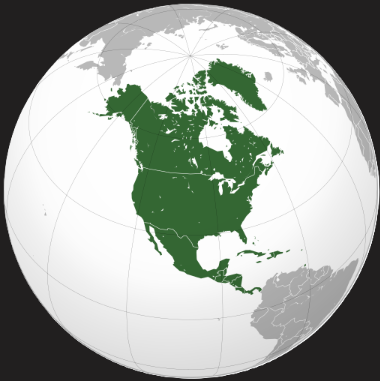
July 23 (Reuters) – U.S. Trade Representative Jamieson Greer on Wednesday said he hopes to strike some interim trade agreements with Mexico and Canada this year while tackling thornier changes to the U.S.-Mexico-Canada Agreement such as stricter rules of origin in 2027.
“We are moving with all due speed on this,” Greer told the Senate Finance Committee in a hearing reviewing President Donald Trump’s trade agenda. Greer will leave Washington on Wednesday for Mexico City for USMCA talks with officials there, including Mexican President Claudia Sheinbaum….
Mexico’s new ambassador to the U.S., Roberto Lazzeri, told Reuters on Friday that Mexico was expecting to reach a new deal on USMCA by the end of the year.
GCC, EU Condemn Iran Attacks, Defend Hormuz Freedom of Navigation
Qatar News Agency, July 19, 2026 – Brussels, July 19 (QNA) – The Gulf Cooperation Council (GCC) and the European Union have condemned the Iranian attacks on some countries of the region and vessels in the Strait of Hormuz, stressing the importance of ensuring freedom of navigation in this international waterway….
Any claims of sovereignty or control over the Strait by any country are unacceptable, the two sides asserted, considering them illegitimate. They further opposed the imposition of any system of clearances, transit tolls, or exchanges of services for international traffic….
The two blocs reemphasized their full solidarity with the countries affected by these attacks, along with sailors from all nationalities who were exposed to danger, confirming that any attack on the security of one of the nations is a source of concern for parties that count on the safety of this critical waterway.
MIDDLE EAST OIL PRODUCTERS STEP UP PLANS TO BYPASS THE STRAIT OF HORMUZ
Associated Press, July 23, 2026 – Before the war in Iran, roughly 15 million barrels of Persian Gulf oil were shipped each day through the Strait of Hormuz. Within a few years, much of that oil could bypass the strait.
As Iran’s chokehold over the strait drags on and oil prices surge, countries across the Gulf are planning to spend billions of dollars to build pipelines enabling them to redirect more supplies to ports on the Red Sea, the Gulf of Oman and the Mediterranean.
AFRICAN UNION:
How AI could unlock Africa’s critical minerals and save miners up to $390 billion a year
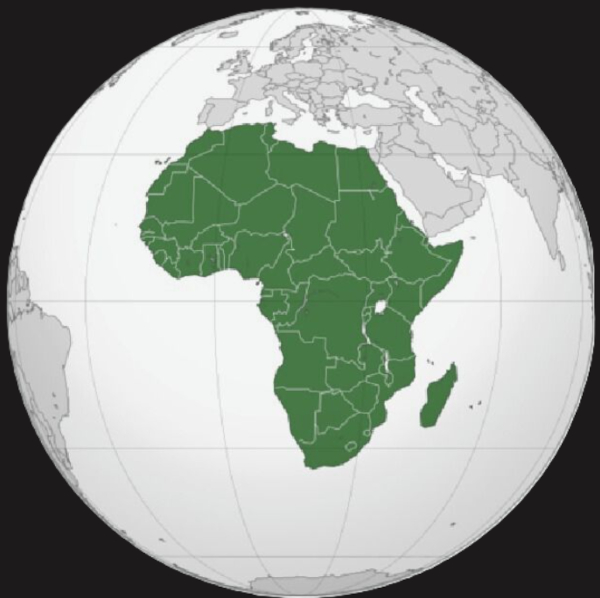
Business Insider, July 18, 2026 – Times are changing across Africa, with commercial interest shifting from traditional minerals such as gold and diamonds to rare and critical minerals that are becoming central to artificial intelligence, global energy, technology and defence industries.
Africa possesses around 30% of global critical mineral reserves, but receives just 10% of the world’s mineral exploration budget and often relies on outdated geological surveys.
Artificial intelligence has the potential to help Africa discover significant mineral deposits, reduce mining costs, and shift away from its traditional role as a raw-material exporter.
DEFINING MOMENT FOR MULTILATERALISM
CHINA IMPLEMENTS 100% ZERO-TARIFF POLICY FOR 53 AFRICAN COUNTRIES
Khmer Times, July 17, 2026 – The global trading system is undergoing a profound transformation. Economic growth continues to slow, geopolitical tensions persist and protectionist rhetoric increasingly shapes policy debates….
Against this backdrop, on May 1, China formally implemented a 100% zero-tariff policy for 53 African countries with which it maintains diplomatic relations, without quota restrictions or political conditions. This milestone, achieved less than 18 months after China extended full tariff elimination to the 33 least-developed African nations with which it has diplomatic relations in December 2024, makes China the first major economy to unilaterally grant comprehensive zero-tariff treatment to all African diplomatic partners….
United Nations Secretary-General Antonio Guterres welcomed the initiative during the 39th African Union Summit, urging all developed countries and major economies to follow suit. African Union Commission Chair Mahmoud Ali Youssouf called China’s proactive openness “particularly crucial” for a continent bearing the brunt of global uncertainty.
NEW REGIONAL ORDER:
Xi Pitches China As Champion Of New Global AI Order
AI CO-OP CENTERS WITH BRICS, ASEAN, LATIN AMERICA, AFRICAN UNION

StratNews Global, July 17, 2026 – China ‘s President Xi Jinping on Friday cast Beijing as the champion of a new global AI order, using Chinese premier tech conference to promote open-source technology and challenge U.S. influence over the rules governing the fast-moving sector….
The speech pitched China’s AI coalition as a rival to the U.S.-led “Pax Silica” international initiative to secure global AI and critical mineral supply chains, though Xi avoided naming Washington….
China will also provide AI training and develop AI cooperation centres with BRICS, ASEAN, Latin American and African Union countries, Xi said, aligning China’s AI diplomacy initiatives with major Global South blocs where China already carries huge influence.
REGIONAL PROTECTIONISM:
Opinion | ‘Fortress North America’ isn’t protection — it’s surrender
‘“ALIGN” IS A EUPHEMISM FOR SUBMISSION’
Toronto Star, July 15, 2026 – But while Canadians have spent more than a year walking the talk on “elbows up” and “Buy Canadian,” some members of Canada’s leadership class have not shown the same resolve.They have embraced a “Fortress North America” model of coexistence with the U.S. and Mexico. It would bind the three members of the Canada-U.S.-Mexico Agreement even closer together.This more thoroughly co-ordinated grouping, led by the U.S. as its dominant economy, would then turn its back on the rest of the world.As Canada’s economic integration with the U.S. became even deeper in the Fortress North America model, Canada would be forced to align its foreign policy, including trade, with Washington. “Align” is a euphemism for submission.
ARAB GULF – GCC:
Bypassing Hormuz: India-Middle East-Europe Economic Corridor could threaten Iran
Jerusalem Post, July 12, 2026 – Iran’s ruling elite is showing growing concern over the rapid progress of the India-Middle East-Europe Economic Corridor (IMEC) project, according to sources familiar with the matter.
The IMEC project would provide a stable trade route that bypasses the Strait of Hormuz, creating an alternative for global trade and energy transmission.
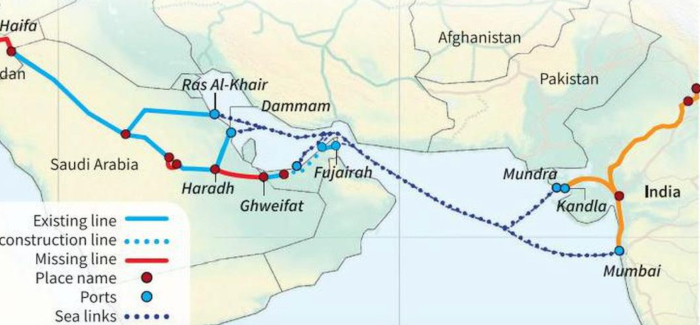
SAUDI ARABIA EXPLORES IMEC ROUTE THROUGH SYRIA, SIDESTEEPING ISRAEL, SOURCES TELL ‘POST’
STRENGTHENING ECONOMIC INTEGRATION ACROSS THE REGION
Jerusalem Post, July 8, 2026 – Saudi Arabia would like a significant change in the proposed India-Middle East-Europe Economic Corridor (IMEC) to sideline Israel from the trade initiative, two people familiar with the matter have told The Jerusalem Post. It wants to reroute the corridor through Syria instead, they said….
The initiative envisioned a network of railways, ports, and shipping lanes, connecting India to the United Arab Emirates, Saudi Arabia, Jordan, Israel, and Greece. It would provide a faster alternative to traditional maritime routes while strengthening economic integration across the region.
REGIONAL PROTECTIONISM:
EU drafts ‘Buy European’ rules for public tenders to curb foreign dependence
SEEKS TO REDUCE CHINA’S DOMINANCE OF CRITICAL MATERIALS PRODUCTION
Reuters, July 9, 2026 – The measures stop short of a blanket “Buy European” requirement, but would allow European authorities to rule out bids for big public contracts that have less than 50% European content and favour EU companies in strategic sectors.
Although the draft document does not specifically name China, the European Commission has already put forward other Buy European policies as it seeks to reduce China’s dominance of critical materials production and narrow a trade gap that expanded by 10% in the first four months of this year.
MADE IN NORTH AMERICA:
CAINTRA Sees USMCA Stability Through 2036, Expands SME Financing
‘TO REMAIN COMPETITIVE AGAINST ASIAN MANUFACTUARING’
Mexico Business, July 7, 2026 – The Chamber of the Transformation Industry of Nuevo Leon (CAINTRA) said USMCA provides long-term certainty for manufacturers despite growing public attention surrounding the treaty’s upcoming joint review, while announcing a new financing alliance with Santander México to strengthen SMEs across the state.
The industrial organization said the agreement remains legally in force through 2036, emphasizing that the review process should be viewed as a routine mechanism designed to strengthen North America’s competitiveness rather than a source of uncertainty for manufacturers and investors….
While expressing confidence in the agreement’s future, CAINTRA said North America must strengthen its productive integration to remain competitive against Asian manufacturing economies.
LATIN AMERICAN NATIONS URGE US TO EXCLUDE THEM FROM FORCED LABOR TARIFFS
IndexBox, July 8, 2026 – Mexico’s Deputy Minister of Economy, Ernesto Acevedo Fernandez, characterized the additional 10% tariff as an unjust penalty for thousands of compliant Mexican businesses, pointing out that no evidence exists of forced-labor goods entering the US through Mexico. The USTR’s proposal does include a tariff exemption for Mexican goods that comply with the USMCA trade agreement. Peru’s Director of Trade Negotiations, Jose Luis Castillo Mezarina, likewise requested that his country be removed from the list, as no harm to US trade has been demonstrated.
NORTH AMERICA – USMCA:
U.S. won’t renew USMCA, opening door for negotiations
CNBC, July 1, 2026 – The decision means the USMCA will stay in effect for another decade, provided no member tries to withdraw from it. But it also triggers yearly reviews that could result in the renegotiation of major parts of the treaty.
U.S. Trade Representative Jamieson Greer, in a statement released while the call was ongoing, said the Trump administration “will continue to engage with Mexico and Canada to address the Agreement’s shortcomings.”
US, CANADA AND MEXICO BEGIN BUMPY NEGOTIATIONS TO RENEW NORTH AMERICAN TRADE PACT
WRAL News, July 1, 2026 – Meantime, any USMCA country can pull out of the pact provided it gives its two partners six months’ notice — a red buzzer that Canada and Mexico, dependent on trade with the United States, fear Trump just might push.
See older article links, summaries in NEWS ARCHIVE


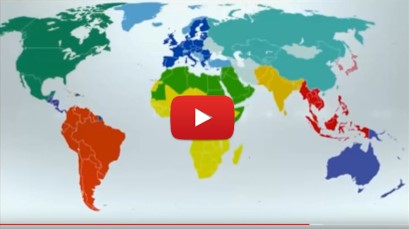
VIDEO: GLOBAL SHAKEDOWN (2015)
The world’s developing and projected regional blocs. (Excerpt @ 20:15 of 27:33)
NORTH AMERICAN CUSTOMS UNION?
Terminate USMCA
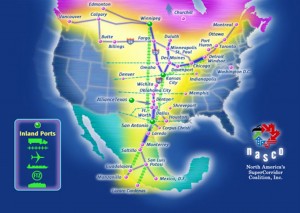
The 2020 ratification of the USMCA “free trade” agreement,” scheduled for review in 2026, created a “problem”:…China and others have been circumventing U.S. customs protection via import dumping into Mexico and Canada.
But the “solution” currently being offered by U.S. Trade Representative Jamieson Greer is even further integration, by “enhancing economic security alignment on tariffs.” Treasury Secretary Scott Bessent also favors tariff alignment into a vast “Fortress North America” economic security bloc.
Incredibly, this incremental regionalism/ globalism is being perceived as an assertion of Trumpian U.S. nationalism across the continent.
But a fully aligned, common-external-tariff structure among North American nations would constitute a “customs union”:
That would be level two of the “five levels of economic integration,” being taught and promoted in international business and other programs at universities throughout the world. The USMCA “free trade” agreement is level one.
This would take North America another step down the same incremental, Hegelian-dialectic, crisis-creating path upon which Jean Monnet pushed European nations to bring about the European Union.
In that regard, the “five levels of economic integration” is a misnomer. The more accurate label is “five steps to political union,” in which national sovereignty would be incrementally surrendered – via “free trade” – to the world’s multinational, regional blocs.
USMCA doesn’t need to be renegotiated. It needs to be terminated.
Kissinger’s false choice:
‘world order’ or ‘competing regional units’:
The ‘new mercantilism’ of emerging regional blocs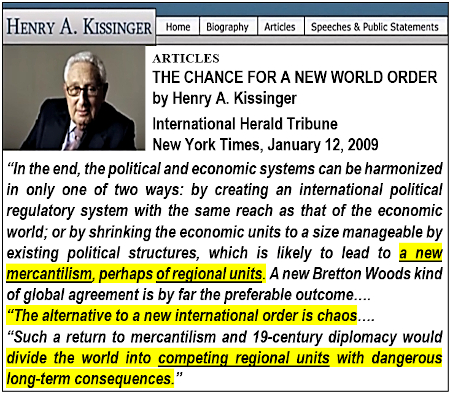 ‘WARS AND RUMORS OF WARS’

“AND AT THE SAME TIME THE CONSCIOUSNESS OF BEING AT WAR, AND THEREFORE IN DANGER, MAKES THE HANDING OVER OF ALL POWER TO A SMALL CASTE SEEM THE NATURAL, UNAVOIDABLE CONDITION OF SURVIVAL.”
George Orwell’s 1984, Part 2, Chapter 9 (Goldstein manifesto, “The Theory and Practice of Oligarchical Collectivism”)

REGIONAL RIVALRIES IN A MULTIPOLAR WORLD: COMPETITION, CONFLICT, ‘PERPETUAL WAR’
The Ukraine war is triggering the next stage in globalism’s great Hegelian dialectic. If nations fall for globalist Henry Kissinger’s “new mercantilism” of “competing regional units,” then nationalism will not subdue globalism–the ultimate antithesis to nations. Instead, EU-style regional blocs will become the globalists’ synthesis of both, and regional infrastructures will continue to usurp nations’ sovereignty.
“Regionalization” may appear to be a setback for globalists’ goal of “one-world government.” But Machiavellian globalists believe that imposed conflict among their emerging regional blocs will strengthen their world order in the long term.

‘…BREAK IN PIECES AND BRUISE’
Machiavellian globalists are using war mongering and mercantilism to prompt emerging blocs to jostle against each other, pressuring the blocs to further strengthen and develop simultaneously, in response to economic competition and perceived security threats from other blocs. This crisis pretext is being used to spook populations into allowing regional institutions to consolidate power and regulatory control of resources away from the sovereignty of each bloc’s member nations, as has already occurred in the European Union.
 ‘THESE HAVE ONE MIND’
Once consolidation of power within regions has occurred, alliances with other blocs can be forged. All the blocs can then be tied into an authoritarian “New World Order” federation of regional blocs, with minimal resistance.
THE NEW MERCANTILISM: ‘ORDER OUT OF CHAOS’
As was typical of historic mercantilism, media reports within both sides of today’s Ukraine crisis acknowledge that military/economic threats from the other region are useful in the deeper integration/consolidation of power within their own regional bloc. Here are some examples:

● THE GREAT EURASIAN ECONOMIC REALIGNMENT Sanctions may accelerate Russia’s economic integration with Asia
● EUROPEAN UNION AMBASSADOR SAYS RUSSIA-UKRAINE CRISIS HAS UNIFIED THE EU AND NATO: ‘FOR US, THIS IS EXISTENTIAL’ – CBS News, Feb 16, 2022 – “I think Russia thought it could divide and conquer us, and it has actually united the European Union and NATO more than we have arguably been ever before,” he said.
● WESTERN SANCTIONS AGAINST RUSSIA MAY BOOST EURASIAN ECONOMIC UNION – RT (Russia Today), March 20, 2014 – “What would then happen is that the Eurasian Economic Union would accelerate in scale very rapidly.”
● ‘THANK YOU, MR PUTIN’ – DW (Deutsche Welle, Germany), March 21, 2014 – “With your annexation of the Crimea you have thrown a much-needed lifeline to…European integration…”
● VLADIMIR PUTIN: HERO OF THE EUROPEAN UNION – Breitbart, March 14, 2014 – “Vladimir Putin’s adventurism in the Ukraine has had a strange side effect: it may well have prolonged the life of his chief rival and antagonist – the European Union…”
‘you’re going to see regional orders spring up’
“I think you’re going to see the evolution of regional organizations, and that regional – because it’s so hard to create a world order – I think you’re going to see regional orders spring up. And then you would have links between regional orders. But they will be very much guided by economic interests, social interests and also security interests….” Frederick Kempe, President and CEO of the Atlantic Council Comments at the World Government Summit, March 29, 2022 (Video excerpt starts at 17:11)
 WOMAN RIDES THE BEAST, “HAVING SEVEN HEADS, AND TEN HORNS” Revelation 17:3
 VIDEO: BLOC HEADS Part 1 of 10: Intro (Africa), European Union (2013) 13:32
King Neb’s ‘Feet and Toes’? Daniel 2: 40-45
GLOBALIZATION ISN’T AS DEAD AS YOU THINK | OPINION
‘REGIONAL HUBS WILL CREATE A WORLD LED BY TWO NEARLY EQUAL POWERS, SURROUNDED BY TRADE SATELLITES’
Penn Live, May 12, 2023 (Pittsburgh Post-Gazette, June 7) – The notion of the ‘one large power’ is over. The idea is that globalization could never have been a monolith – a self-sustaining whole but rather something that is interrelated with local and regional needs. Regional hubs will create a world led by two nearly equal powers, surrounded by trade satellites – one we expect to be a U.S.-led side that includes USMCA, Latin America, and Europe. The other, a Chinese-led side that will include Asia-Pacific, Central Asia, and parts of Africa.
The writer’s number of regional “satellites” is short of the roughly ten major regional blocs that are in existence today. They are still in a state of flux, conflict, development and consolidation of power, but the Bible’s latter-day scenario of ten contemporaneous kingdoms is coming into view.